
ABB IRB 460 vs Yaskawa Motoman SP100B: Robot Comparison

Updated: 9 hours ago
IN A NUTSHELL
🔎 THE KEY DIFFERENCE ABB IRB 460 has the higher stated load capacity and longer stated reach. Those figures help shortlist it for heavier loads or wider layouts, but do not prove a faster production cycle. Their 4- and 7-axis mechanisms also offer different movement options. |
→ CONSIDER ABB IRB 460 Consider it when additional load capacity and reach matter. This article compares 110 kg with a published reach of 2400 mm; include the gripper and part in the load. |
→ CONSIDER Yaskawa Motoman SP100B Consider it when its stated load and reach already cover your task and its controls fit your equipment. This article compares 100 kg with a published reach of 2236 mm; include the gripper and part in the load. |
💡 THE TAKEAWAY Check the required tool angles and approach path: different axis counts change movement options. Choose only after both suppliers demonstrate the loaded task and quote the same complete installation. |
ABB IRB 460 vs Yaskawa Motoman SP100B is an engineering buying comparison for palletizing versus articulated handling. ABB IRB 460 is a four-axis palletizer; the other candidate is a spot-welding robot. A level-product pallet cycle and a part requiring roll or pitch are different tasks. The choice begins with required orientation and process equipment.
The starting-price references in the linked reviews are USD 65,000 for ABB IRB 460 and USD 52,000 for Yaskawa Motoman SP100B. The analysis distinguishes tool load, geometry, process equipment, controller ownership and installed cost. Neither a review price nor a robot-only specification defines a complete commissioned cell.
Quick verdict
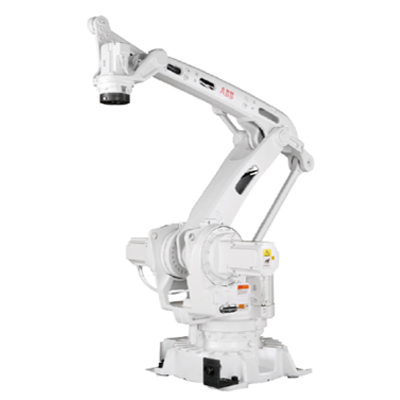
ABB IRB 460: Level-product palletizing and end-of-line transfer with a 110 kg load limit. This is a four-axis palletizer. It does not offer arbitrary six-axis part orientation.
Yaskawa Motoman SP100B: Resistance spot welding using a 100 kg robot and the required gun package. Spot-gun mass, inertia, utilities and process control differ from general handling or arc welding. This model has seven controlled axes.
ABB IRB 460 vs Yaskawa Motoman SP100B: technical specifications
Specification | ABB IRB 460 | Yaskawa Motoman SP100B |
|---|---|---|
Configuration used | ABB IRB 460 | Yaskawa Motoman SP100B |
Attached-load reference | 110 kg | 100 kg |
Horizontal reach / arm length | 2400 mm | 2236 mm |
Position repeatability | ±0.20 mm | Not specified in the source review |
Controlled axes | 4 | 7 |
Arm / installation mass reference | Confirm exact configuration | Confirm exact configuration |
Arm protection | IP67 | Confirm exact protection package |
Controller | ABB IRC5 or OmniCore | YRC1000 |
Indicative review starting reference | USD 65,000 | USD 52,000 |
The table uses ABB IRB 460 as the worked ABB configuration. The linked reviews describe the underlying data. Confirm the exact mechanical generation, controller revision, installation orientation, environmental package and load chart against the supplied order code.
Start with the process, not the payload headline
ABB IRB 460 is a four-axis palletizer; the other candidate is a spot-welding robot. A level-product pallet cycle and a part requiring roll or pitch are different tasks. The choice begins with required orientation and process equipment. The acceptance case for this pair should be: The real infeed, farthest pallet corner, top layer, full gripper load, pallet change and failed-release response. The useful outcome to measure is stable completed pallets per hour, load margin and safe exchange downtime. A supplier demonstration must use the same workpiece range, tool mass, fixtures and normal operating conditions for both proposals.
A dedicated process arm and a general-purpose manipulator can sometimes perform similar motions, yet require very different integration. A torch needs process utilities and seam access; a spot gun imposes mass, inertia and clamp requirements; a pallet tool needs stable grip and stack coverage. Include those differences before comparing robot-only prices.
Payload, wrist moments and the complete end effector
For the worked configurations, the load references are 110 kg and 100 kg. Count fingers, adapters, cameras, valves, cables carried by the wrist and the actual workpiece. A nominally permitted part can become an excessive load once its gripping hardware is added. Use the relevant load diagram rather than assuming the maximum payload is allowed at every centre of gravity.
Check moments and inertia at the worst tool orientation and during the required acceleration. Long, offset parts can create a wrist problem while staying below the mass limit. For a welding gun, include the complete utilities and balancing arrangement. For a pallet gripper, include the full layer or multiple picked cases and a credible grip-loss condition.
Workspace, axis count and required orientation
ABB IRB 460 has 4 controlled axes and the worked reach is 2400 mm; Yaskawa Motoman SP100B has 7 axes and 2236 mm. The axis-count difference changes feasible orientation or posture. Do not treat a four-axis palletizer, five-axis small arm, six-axis manipulator and seven-axis spot robot as geometrically interchangeable. Check every required pickup, process, reject and recovery pose with the tool attached.
Use a tool-centre-point layout and include the carried-part envelope, machine doors, fixture walls, hose loops and neighboring equipment. Horizontal reach is not the same as vertical reach or useful reach below a shelf. A reachable endpoint can still fail because the wrist cannot attain the required approach angle or retreat without a collision.
ABB IRB 460: engineering assessment
A level case, bag or layer movement may benefit from a palletizing mechanism, while a part that needs tilting or regripping requires a different concept. Include complete stack height, pallet changes and gripper release behavior. In this comparison, the worked configuration is ABB IRB 460, with 110 kg, 2400 mm and the stated repeatability reference of ±0.20 mm. Its practical benefit should be demonstrated at the intended operating load rather than inferred from the family label.
This is a four-axis palletizer. It does not offer arbitrary six-axis part orientation. Identify who owns the final RAPID program, RobotStudio project, safety settings and backups. Existing ABB experience is useful when the actual maintenance team can restore a stopped application, identify a failed component and keep the cell supported through its planned service life.
Yaskawa Motoman SP100B: where the alternative adds value

Validate gun clearance, clamp forces, cable service and the non-welding travel path. Yaskawa Motoman SP100B's payload number is not evidence that an equally rated palletizing or handling robot includes the same gun interface or production process. Its reviewed combination is 100 kg, 2236 mm and Not specified in the source review positioning repeatability. Spot-gun mass, inertia, utilities and process control differ from general handling or arc welding. This model has seven controlled axes. Establish what that configuration adds to the actual task: a useful orientation, smaller workspace, longer path coverage, specific process equipment or a more familiar controller.
The source identifies YRC1000 for Yaskawa Motoman SP100B. INFORM and MotoSim form the programming and simulation route described in the review. Compare the local team's ability to create, diagnose, back up and recover the finished application rather than judging software only by a short sales demonstration.
Precision and process quality
The two positioning references are ±0.20 mm and Not specified in the source review. These concern returning to a pose under stated conditions; they are not a finished-part tolerance guarantee. Absolute accuracy, path behavior, fixture stiffness, calibration, tool wear, thermal change and workpiece variation remain separate. Where a variant-specific precision value is not documented, obtain it for the quoted order code.
Measure stable completed pallets per hour, load margin and safe exchange downtime. For welding, inspect the accepted seam or spot result using a qualified process. For handling, count stable pickup and placement throughout the fixture range. For palletizing, test stack stability and top-layer clearance. A faster unloaded movement or one successful prepared sample does not establish sustained production quality.
Controller, interfaces and error recovery
ABB IRC5 or OmniCore and YRC1000 are the controller references for the reviewed configurations. Controller generation affects the program format, available interfaces and support plan. Confirm the actual pendant, network roles, protocol options, external-axis support and software licences; a capability mentioned in a brochure is not proof that it is enabled in the starting package.
Prepare an I/O and network schedule for the PLC, gripper, machine, process equipment, vision and protective devices. Specify acknowledgement timeouts, safe state and restart sequence. Demonstrate a lost grip, missing part, rejected result, interrupted machine cycle and communication loss. Retain editable programs, calibration files, controller backups and a recovery guide suitable for the intended operators.
Guarding, environment and installation
These are industrial robot applications. Design the complete safeguarding concept around the robot, tools, carried part, stored energy, machine and process hazards. Safe access, stopping behavior, interlocks, isolation and restart belong in the cell design. A newer controller or an additional axis does not make an industrial application suitable for unrestricted human access.
The arm protection references are IP67 for the reviewed ABB package and Confirm exact protection package for Yaskawa Motoman SP100B. An unspecified value requires exact-package confirmation. Check the cabinet, tool, connectors and dress pack separately. Ingress protection alone does not approve every coolant, abrasive exposure, chemical or high-pressure cleaning method.
The ABB mass reference is Confirm exact configuration; the alternative's review gives Confirm exact configuration. Keep carried payload separate from installation mass and cabinet weight. Design the support, anchoring, lifting plan, cooling space and service route using the exact drawings. Shelf-mounted and very heavy arms can make structural work a significant part of total installed cost.
Starting price and installed-cost comparison
The numerical starting references are USD 65,000 and USD 52,000. They remain indicative review figures, not equivalent turnkey offers. New, legacy, refurbished and process-package quotations can have different scope and condition. Confirm the supplied revision, warranty, support, delivery and commissioning responsibilities before using either number in a payback calculation.
Request comparable bills of materials covering robot and controller, tool, fixtures, process utilities, sensing, safeguarding, machine interfaces, support structure, integration, simulation, commissioning and training. Include freight, tax and on-site work where applicable. Assign responsibility for faults spanning vendors. A lower arm price can be outweighed by an extra positioner, unsuitable fixture, structural change or software maintenance burden.
Decision gates for the actual cell
Gate | This pair | Evidence to require |
|---|---|---|
Process fit | Palletizing versus articulated handling | The real infeed, farthest pallet corner, top layer, full gripper load, pallet change and failed-release response. |
Configuration | ABB IRB 460 versus Yaskawa Motoman SP100B | Full order code and matched load drawing |
Load | 110 kg versus 100 kg | Tool, part, moments and inertia |
Workspace | 2400 mm versus 2236 mm | All required orientations and a loaded path |
Quality | ±0.20 mm versus Not specified in the source review | Stable completed pallets per hour, load margin and safe exchange downtime. |
Installed value | USD 65,000 versus USD 52,000 | Aligned quotation, scope and support plan |
Begin with the actual process: palletizing versus articulated handling. Level-product palletizing and end-of-line transfer with a 110 kg load limit. Resistance spot welding using a 100 kg robot and the required gun package. Eliminate a candidate if it cannot meet the complete load, pose, quality or safeguarding requirement. If both pass, compare useful throughput, operator changeover and the maintenance burden of the supplied system. A different robot category can be appropriate only when the whole cell concept changes with it.
Give both suppliers the same tool CAD, part range, fixture model, target output and access pattern. Agree measurable pass criteria before the trial. Use representative variation and normal safety settings; include replenishment, rejects, process interruptions and recovery after power loss. Keep the tested configuration, program and acceptance record as part of the delivered system.
Complete product reviews
Frequently asked questions
Which should I choose: ABB IRB 460 or Yaskawa Motoman SP100B?
ABB IRB 460 is a four-axis palletizer; the other candidate is a spot-welding robot. A level-product pallet cycle and a part requiring roll or pitch are different tasks. The choice begins with required orientation and process equipment. Choose the complete proposal that passes the real load, process-quality, workspace and safeguarding requirements, then compare installed cost and the skills needed to maintain it.
Which ABB configuration is compared with Yaskawa Motoman SP100B?
ABB IRB 460 is used as the worked configuration, with 110 kg and 2400 mm. The linked review identifies the model and controller scope. Confirm the full order code and generation with the supplier.
What starting prices are used?
The linked review references are USD 65,000 for ABB IRB 460 and USD 52,000 for Yaskawa Motoman SP100B. Confirm the current supplied package, condition, controller, process equipment, safeguarding, delivery and integration scope.
Does payload include the tool?
Yes. Include the complete end effector, adapters, attached equipment and workpiece, then verify the permitted centre of gravity, wrist moments and inertia. The worked references are 110 kg and 100 kg. A part below the mass headline can still violate an eccentric-load or inertia limit.
Are the reach and axis counts directly interchangeable?
No. The comparison uses 2400 mm with 4 axes and 2236 mm with 7 axes. Check tool offset, required orientation, joint limits, vertical or below-base access and the full loaded path. A four-axis or five-axis mechanism does not offer every six-axis orientation.
Does repeatability guarantee process quality?
No. The positioning references are ±0.20 mm and Not specified in the source review. Measure the finished result with representative fixtures, tooling and part variation. For this comparison, the process criterion is stable completed pallets per hour, load margin and safe exchange downtime.
What is the main limitation of Yaskawa Motoman SP100B?
Spot-gun mass, inertia, utilities and process control differ from general handling or arc welding. This model has seven controlled axes. Validate gun clearance, clamp forces, cable service and the non-welding travel path. Yaskawa Motoman SP100B's payload number is not evidence that an equally rated palletizing or handling robot includes the same gun interface or production process.
What should be demonstrated before purchase?
The real infeed, farthest pallet corner, top layer, full gripper load, pallet change and failed-release response. Include machine or process interlocks, normal guarding, missed grip or rejected part, communication loss, changeover and safe restart. Retain the exact configuration, controller backup, program and agreed acceptance record from the trial.

