
Yaskawa Motoman MH180 and MH225 Review: Specs, Uses, Pros & Cons

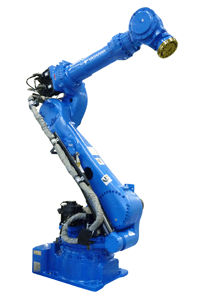
Yaskawa Motoman MH180 and MH225 review: Review scope — MH180 and MH225 handling family. Kinematics — Six-axis heavy handling. This review examines the documented configuration, engineering tradeoffs and practical buying questions for this product.
Quick Verdict
A focused heavy handling pair where a relatively compact interference envelope can help dense production layouts. Choose between the exact models using load diagrams and access, rather than inferring all specifications from their names.
Technical Specifications
Technical field | Documented configuration / buying implication |
|---|---|
Review scope | MH180 and MH225 handling family |
Kinematics | Six-axis heavy handling |
Design | Rigid reducers and slim upper-arm/wrist arrangement |
Base interference | 515 mm documented zone |
Payload | Confirm exact MH180 or MH225 load diagram |
Controller | Delivered generation and options must be identified |
Price | Request a configuration-specific quotation |
Design and Engineering Assessment
The source emphasizes narrower arm and wrist geometry and a 515 mm base interference zone. This can help place the robot near machinery, but a base clearance figure is not the complete swept volume. Include counter-motion, gripper projection and maintenance access. Rigid reducers support dynamic handling, yet the complete tool inertia and fixture compliance still govern settling. A model-specific datasheet is essential because the family listing does not establish a shared payload, reach or controller specification for both machines.
Applications and Best-Fit Projects
Consider heavy component handling, machine tending and tightly arranged industrial transfer cells.
Process architecture and mechanical selection
Begin with the process, then select a robot. Payload, reach and axis count must be evaluated together with tool moments, inertia and the required approach direction. Include cable dress, fixtures and auxiliary axes in the simulation. Portfolio maxima are especially easy to misuse: the largest payload, longest reach and finest repeatability may belong to three different configurations. Require one exact model specification for the final design.
Controls and responsibility boundaries
Specify whether the supply includes an arm, controller, process package or complete accepted cell. Allocate responsibility for PLC interfaces, tooling, machine interlocks, programming, cycle qualification and operator training. These boundaries determine both installed cost and fault-resolution time. For an older controller generation, confirm supported software, spare parts and replacement procedures before evaluating a low purchase price.
Acceptance and lifecycle performance
Measure good output over representative operation, including changeover, process checks and recovery. Maximum motion speed does not establish production throughput. Check maintenance access and the effect of service on calibration. A robust comparison uses the same load, tooling, process quality target and support horizon for every candidate, rather than mixing robot-only quotations with complete cell proposals.
Price, Value and What the Quote Should Include
Request a quotation for the exact configuration described in the technical table. Separate the base equipment from tooling, software options, installation, commissioning, training and ongoing service. Ask the supplier to identify the delivered revision and acceptance obligations in writing. A low hardware price is not a saving if the project requires unbudgeted integration or unsupported accessories.
For the value assessment, compare the present workflow with a realistic proposed cycle. Include the time people still spend loading, replenishing, checking quality and recovering faults. Estimate savings only from changes the proposed system can actually deliver. Keep maintenance, changeover and support availability in the calculation, and use a representative pilot to replace optimistic assumptions with measured results.
Pros and Cons
Strengths
• Heavy handling architecture
• Slim arm and wrist emphasis
• Documented compact base zone
Limits to Account For
• Pair listing is not one specification
• Full tool envelope exceeds base zone
Commissioning and Acceptance Checklist
Obtain the exact model load curves and controller record, then simulate base, rear-arm and full-tool clearances under load.
Write the required result, test conditions and pass/fail threshold before running acceptance. Include the least favorable normal load or part, a representative shift or operating sequence and the recovery cases that occur in the real workflow. Keep a record of the supplied hardware, software and settings so future maintenance can restore the same validated behavior.
Who Should Consider It
Consider heavy component handling, machine tending and tightly arranged industrial transfer cells. A focused heavy handling pair where a relatively compact interference envelope can help dense production layouts. Choose between the exact models using load diagrams and access, rather than inferring all specifications from their names.
Frequently Asked Questions
What is Yaskawa Motoman MH180 and MH225 best suited to?
Consider heavy component handling, machine tending and tightly arranged industrial transfer cells.
Which technical specifications matter most for Yaskawa Motoman MH180 and MH225?
The documented starting points are Review scope: MH180 and MH225 handling family; Kinematics: Six-axis heavy handling; Design: Rigid reducers and slim upper-arm/wrist arrangement. Match those values to one supplied configuration; do not combine family endpoints or assume an optional package is included.
How should Yaskawa Motoman MH180 and MH225 be integrated into a real workflow?
Begin with the process, then select a robot. Define the task boundaries, handoff signals and exception states before commissioning. Verify them with the actual tooling, carriers, fixtures or site data rather than a simplified demonstration.
What are the main limitations of Yaskawa Motoman MH180 and MH225?
The main constraints are pair listing is not one specification; full tool envelope exceeds base zone. The source emphasizes narrower arm and wrist geometry and a 515 mm base interference zone. Compare the complete installed solution against the process requirement rather than relying on a single headline figure.
What does Yaskawa Motoman MH180 and MH225 cost?
Request a configuration-specific quotation. A verified fixed public price for the complete package is not established here. The proposal should identify included hardware, required software, integration, training, service and any recurring charges so competing quotations cover the same scope.
Can Yaskawa Motoman MH180 and MH225 operate without human involvement?
Do not infer unattended reliability from a successful demonstration. Define which task steps are automated, which still require operators and how the system reacts to missing inputs, obstruction or process faults. Release only the validated operating envelope.
What should be tested before accepting Yaskawa Motoman MH180 and MH225?
Obtain the exact model load curves and controller record, then simulate base, rear-arm and full-tool clearances under load. Record measurable acceptance criteria and retain the results for the delivered configuration.
How should buyers compare Yaskawa Motoman MH180 and MH225 with alternatives?
Use the same task, quality target, operating conditions and support horizon for each proposal. Choose between the exact models using load diagrams and access, rather than inferring all specifications from their names. Compare total installed and operating cost, including recovery effort and changeover, rather than robot-only price.
Specifications and included options depend on the ordered model and revision. Confirm the final configuration, commercial terms and local support with the supplier.


