
Yaskawa MotoEye Review: Specs, Price and Applications

Updated: 7 days ago
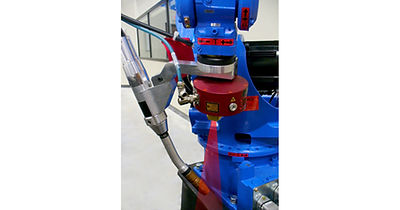
Yaskawa MotoEye is a pair of arc welding software packages for Motoman robots: MotoEye SF finds weld seams with Servo-Robot SF-D laser cameras, and MotoEye LT tracks the joint in real time with laser seam tracking. Pricing is available on request for the required configuration.
Quick Verdict
MotoEye SF reads joint offset and geometry over a high-speed Ethernet link and corrects the weld path and parameters for parts with varying position and fit-up; combined with ComArc through-arc tracking it gives preview-adaptive welding at lower cost. MotoEye LT tracks joints at high speed, even on a coordinated positioner, and adapts weld conditions to the measured gap.
Yaskawa MotoEye is most relevant when its stated function matches the intended process. This product belongs on the shortlist when its stated vision function matches the inspection or perception problem and the surrounding acquisition and control system can support it. Confirm the complete configuration and test representative data before scaling to production. A team seeking a turnkey station should evaluate the whole solution, including hardware, software licences, calibration and support.
MotoEye SF / MotoEye LT at a Glance
Manufacturer: Yaskawa Motoman
Model: MotoEye SF / MotoEye LT
Product type: Welding seam finding and tracking software
Versions: MotoEye SF (seam finding), MotoEye LT (seam tracking)
Camera: Servo-Robot SF-D laser cameras (SF)
Interface: High-speed Ethernet
Data: Joint offset, joint geometry, gap
Tracking: Real time, including coordinated positioners (LT)
MotoEye SF / MotoEye LT Technical Specifications
Specification | Yaskawa MotoEye |
Manufacturer | Yaskawa Motoman |
Model | MotoEye SF / MotoEye LT |
Product type | Welding seam finding and tracking software |
Versions | MotoEye SF (seam finding), MotoEye LT (seam tracking) |
Camera | Servo-Robot SF-D laser cameras (SF) |
Interface | High-speed Ethernet |
Data | Joint offset, joint geometry, gap |
Tracking | Real time, including coordinated positioners (LT) |
Price | Price on request |
Design and Build Quality
A vision workflow should be assessed as a chain: image acquisition, processing and the decision delivered to the machine. The hardware or software can contribute useful capabilities without solving every part of that chain. Define which outputs the process needs and which conditions make a result unreliable. This keeps a successful demonstration from being confused with a validated inspection system.
Protection and Installation
Begin with representative images or measurements from the actual process. Include normal variation, difficult materials and borderline cases. Lighting, lens choice, camera position and data quality can affect the result as strongly as the processing method. Keep the acquisition conditions consistent while evaluating parameters, then deliberately test variation before committing to the installation.
Programming and Software
The appropriate workflow depends on whether the product supplies a graphical environment, a library, a camera interface or a complete measurement station. Use its documented interfaces for the selected configuration. A graphical setup can reduce initial programming, while a library can provide greater control inside an existing application. Neither removes the need for testing, configuration management and predictable recovery.
Integration and Operating Workflow
Separate configuration of the vision task from integration with the machine sequence. The application needs to associate a result with the correct workpiece and handle invalid data, delays and disconnects. Establish a clear acknowledgement between the processing system and its consumer so that an old or incomplete result cannot be mistaken for the next part's measurement.
MotoEye SF / MotoEye LT Applications and Use Cases
Robotic arc welding
Yaskawa MotoEye is described for robotic arc welding. For this application, define the acceptance criterion before optimizing the setup. A useful evaluation includes both successful and unsuccessful cases and records how often the system makes the wrong decision. Measurement, detection and identification are different tasks; choose the output that the process actually needs rather than relying on an attractive visualization.
Seam finding
Yaskawa MotoEye is described for seam finding. For this application, define the acceptance criterion before optimizing the setup. A useful evaluation includes both successful and unsuccessful cases and records how often the system makes the wrong decision. Measurement, detection and identification are different tasks; choose the output that the process actually needs rather than relying on an attractive visualization.
Circumferential welding of tanks and vessels
Yaskawa MotoEye is described for circumferential welding of tanks and vessels. For this application, define the acceptance criterion before optimizing the setup. A useful evaluation includes both successful and unsuccessful cases and records how often the system makes the wrong decision. Measurement, detection and identification are different tasks; choose the output that the process actually needs rather than relying on an attractive visualization.
Adaptive welding
Yaskawa MotoEye is described for adaptive welding. For this application, define the acceptance criterion before optimizing the setup. A useful evaluation includes both successful and unsuccessful cases and records how often the system makes the wrong decision. Measurement, detection and identification are different tasks; choose the output that the process actually needs rather than relying on an attractive visualization.
Relevant Industries
Metal fabrication
Pressure vessels
Automotive
Heavy equipment
MotoEye SF / MotoEye LT Price and Value
Price on request. Request a current quotation from Yaskawa Motoman for the intended configuration and deployment. No fixed USD price is assumed for this review.
The total vision-system budget can include cameras, optics, illumination, acquisition hardware, software licences, computing, calibration and integration. Ask for a quotation that identifies the included components and the intended deployment model. Development access, a runtime licence and a complete installed station can be different purchases.
Pros and Cons
Pros
Corrects for part variation
Adaptive weld parameters
Real-time tracking on positioners
Cons
Requires Servo-Robot laser hardware
Who Should Choose MotoEye SF / MotoEye LT?
This product belongs on the shortlist when its stated vision function matches the inspection or perception problem and the surrounding acquisition and control system can support it. Confirm the complete configuration and test representative data before scaling to production. A team seeking a turnkey station should evaluate the whole solution, including hardware, software licences, calibration and support.
MotoEye SF / MotoEye LT FAQ
What is Yaskawa MotoEye?
Yaskawa MotoEye is a pair of arc welding software packages for Motoman robots: MotoEye SF finds weld seams with Servo-Robot SF-D laser cameras, and MotoEye LT tracks the joint in real time with laser seam tracking.
How much does MotoEye SF / MotoEye LT cost?
Price on request. Obtain a current quotation for the required configuration, licences, accessories and services. Prices are indicative and may change.
What applications is MotoEye SF / MotoEye LT intended for?
Its stated applications include Robotic arc welding, Seam finding, Circumferential welding of tanks and vessels, Adaptive welding. Validate the complete intended task before deployment.
What are the main specifications?
Versions: MotoEye SF (seam finding), MotoEye LT (seam tracking); Camera: Servo-Robot SF-D laser cameras (SF); Interface: High-speed Ethernet; Data: Joint offset, joint geometry, gap.
How should it be integrated?
Separate configuration of the vision task from integration with the machine sequence. The application needs to associate a result with the correct workpiece and handle invalid data, delays and disconnects. Establish a clear acknowledgement between the processing system and its consumer so that an old or incomplete result cannot be mistaken for the next part's measurement.
What are its main strengths?
Corrects for part variation Adaptive weld parameters Real-time tracking on positioners
What should buyers check before selecting it?
Requires Servo-Robot laser hardware Begin with representative images or measurements from the actual process. Include normal variation, difficult materials and borderline cases. Lighting, lens choice, camera position and data quality can affect the result as strongly as the processing method. Keep the acquisition conditions consistent while evaluating parameters, then deliberately test variation before committing to the installation.
Who is the best fit for MotoEye SF / MotoEye LT?
This product belongs on the shortlist when its stated vision function matches the inspection or perception problem and the surrounding acquisition and control system can support it. Confirm the complete configuration and test representative data before scaling to production. A team seeking a turnkey station should evaluate the whole solution, including hardware, software licences, calibration and support.
Prices and package contents are indicative and may change. Confirm the final configuration, licensing, accessories, shipping, taxes and integration scope in a supplier quotation.


