
UR16e vs JAKA Zu 18: Heavy-Payload Cobot Comparison of Price, Reach and Precision

The Universal Robots UR16e and the JAKA Zu 18 are built for heavy parts at short to medium distances. The Zu 18 carries 2 kg more, reaches 173 mm further, repeats more tightly and costs about 39% less. The UR16e is slightly lighter and has a built-in force/torque sensor.
Quick verdict. The JAKA Zu 18 offers more capability for less, with 18 kg payload, 1073 mm reach, ±0.03 mm repeatability and a listed price about 39% lower. The UR16e is the better choice for force-controlled heavy tasks, with a ±160 N / ±10 Nm force/torque sensor and the UR+ ecosystem.
UR16e and JAKA Zu 18 at a glance
The UR16e carries 16 kg over 900 mm, repeats to ±0.05 mm and weighs 33.1 kg.
The JAKA Zu 18 carries 18 kg over 1073 mm, repeats to ±0.03 mm, weighs 35 kg and is rated IP54.
Main specification comparison
Specification | Universal Robots UR16e | JAKA Zu 18 |
Brand | Universal Robots | JAKA |
Listed price | $59,300 | $36,000 |
Payload | 16 kg | 18 kg |
Reach | 900 mm | 1073 mm |
Repeatability | ±0.05 mm | ±0.03 mm |
Axes | 6 | 6 |
Speed | 3 m/s maximum TCP speed | 3.5 m/s |
Arm weight | 33.1 kg | 35 kg |
IP rating | IP54 | IP54 |
Controller | UR control box CB 5.5 / CB 5.6 | JAKA StandardCab control cabinet |
Price comparison

UR16e: listed from $59,300
JAKA Zu 18: listed from $36,000
Difference: $23,300
The JAKA Zu 18 costs roughly 39% less
Payload, reach and speed
The Zu 18 carries 18 kg, 2 kg more, and reaches 1073 mm, 173 mm more than the UR16e. JAKA publishes a 3.5 m/s maximum TCP speed, against 3 m/s for the UR16e. Machine loading, box handling and moving heavy workpieces between stations suit both arms.
Precision and weight
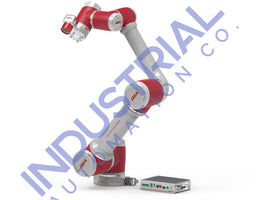
JAKA publishes ±0.03 mm repeatability for the Zu 18, against ±0.05 mm for the UR16e. The two arms weigh almost the same, 33.1 kg and 35 kg, so they fit similar pedestals. The Zu 18 can be mounted at any angle.
Sensing and software
The UR16e has a built-in ±160 N / ±10 Nm force/torque sensor for heavy screwdriving, nutrunning and pressing, and runs PolyScope with PROFINET, EtherNet/IP, Modbus TCP, ROS/ROS2 and UR+ accessories. The Zu 18 runs on the JAKA StandardCab control cabinet.
Best applications for the UR16e

Heavy screwdriving and nutrunning
Force-controlled pressing
Existing UR cells
Best applications for the JAKA Zu 18
Machine loading with heavy parts
Box handling
Budget-conscious heavy handling
UR16e advantages

Built-in force/torque sensor
33.1 kg arm
UR+ ecosystem
UR16e limitations
About $23,300 higher listed price
900 mm reach
JAKA Zu 18 advantages
18 kg payload and 1073 mm reach
±0.03 mm repeatability
About 39% lower listed price
JAKA Zu 18 limitations
IP54 rating
Final verdict
Choose the JAKA Zu 18 for payload, reach and precision at a lower price. Choose the UR16e for force-controlled heavy tasks and the UR+ ecosystem.
Sources and further reading
Frequently asked questions
Which is cheaper, the UR16e or the JAKA Zu 18?
The JAKA Zu 18 is listed from $36,000 and the UR16e from $59,300, a difference of $23,300.
Which robot carries more?
The JAKA Zu 18 carries 18 kg and the UR16e 16 kg.
Which robot has the longer reach?
The JAKA Zu 18 reaches 1073 mm and the UR16e 900 mm.
Which robot is more precise?
The JAKA Zu 18 publishes ±0.03 mm repeatability and the UR16e ±0.05 mm.
Does the UR16e have force sensing?
Yes. A ±160 N / ±10 Nm force/torque sensor is built into the tool flange.
Which robot should I buy?
Choose the JAKA Zu 18 for capability and value. Choose the UR16e for force control.


