
Teledyne DALSA Linea Series Review

Updated: 7 days ago
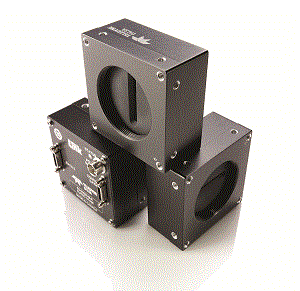
Teledyne DALSA Linea Series is a line-scan imaging configuration. This source-based review evaluates its documented acquisition branch and practical transport integration without claiming hands-on testing. Price: Request a quote.
The camera should be selected as part of an imaging system rather than evaluated from one headline specification. The useful result is an image that reveals the required feature at the right time, followed by a reliable inspection or measurement decision. This review considers the documented acquisition package, optical implications and practical purchasing scope for Linea Series.
Quick Verdict
The catalog’s single-line Linea branch merits evaluation when an exact width and receiving mode fit the required scan. It is distinct from bilinear Color, charge-domain HS and newer Lite branches. The 2k, 4k and 8k examples have separate model scope. Keep the 80 kHz acquisition headline attached to the quoted configuration.
Linea Series Technical Specifications
Specification | Value or configuration |
Product | Teledyne DALSA Linea Series |
Image format | Line width and channels in the exact capture mode |
Acquisition | Single-Line Cmos |
Interface | Ordering-specific line-scan receiving |
Capture rate | Up to 80 kHz in the identified catalog branch |
Catalog branch | LA-CM-XXXX single-line CMOS |
Catalog widths | 2k / 4k / 8k |
Catalog pixel pitch | 7 µm |
Line-rate headline | Up to 80 kHz; model and mode apply |
Configuration | Selected interface, optics and transport controls |
Price | Request a quote |
Design and Optical Requirements
Plan scan width and along-motion sampling independently. The camera observes one line, while the material movement builds the two-dimensional representation. Optics and illumination must preserve useful detail across the width. Validate normal presentation and speed variation before choosing regions or correction settings that could remove required inspection information.
Acquisition Speed and Integration
Confirm the exact interface, trigger and selected line representation with the host. Flat-field references and user sets need the commissioned light and geometry. A configuration utility supports setup without proving sustained receiving or object association. Test transport, data retention, host inspection and controller timing as one complete workflow.
Programming and Image Processing
Preserve exposure, gain, line triggering, channel registration and flat-field or other correction settings with the scan recipe. For TDI, preserve the selected integration and motion arrangement. Changes can alter boundaries, contrast and downstream thresholds. Validate independent samples after firmware or recipe changes, and keep the response to missing lines or unusable data explicit.
Image Data and Host Capacity
Budget line samples, channels, numeric representation and acquisition frequency together. The transport and selected line cadence determine along-motion sampling; reconstructed image length adds retention and processing scope. Include buffers, metadata and references. Test sustained receiving and correctly timed results using the commissioned transport rather than interpreting line width as a conventional area frame.
Linea Series Applications and Use Cases
Web inspection, material imaging or another moving-object task can merit a configured trial when the required feature is observable. Use independent known-good and known-fault samples with normal transport and presentation variation. Record wrong accepts, wrong rejects and missing scanned regions. A clear line or reconstructed reference image should lead to measured acceptance evidence rather than replace it.
Building a Useful Acceptance Trial
Prepare representative parts or scenes that include the smallest required feature, normal production variation and realistic faults. Confirm the field of view and exposure before tuning the inspection. Record wrong accepts, wrong rejects, missing frames and the complete trigger-to-decision timing. A trial should also show what happens when the expected image is absent or unusable. This connects camera selection to the station's actual acceptance requirement rather than relying on a sharp reference picture.
Linea Series Price and Value
Price: Request a quote. Ask for the complete Linea Series ordering code and an itemized scope covering the camera, suitable optics, receiving hardware, cables, power and commissioning. Compare quotations for the same image format, acquisition mode and integration scope. The cost of a camera component is different from the cost of a working inspection station. Evaluate any financial return with the plant's actual labor, defect, rework and maintenance data; no universal payback period follows from these specifications.
Comparison and Selection
Compare this line-scan approach with another scan configuration or an area-camera layout using the same required field and feature sampling. Receiver, encoder, illumination and host processing are part of the comparison. More line samples or a faster maximum does not guarantee a better completed station. Demonstrate the actual moving-material decision and a maintainable accepted installation.
Ordering, Environment and Lifecycle
Require the exact model, sensor branch, optics, interface, power, firmware and software scope. Confirm the documentation revision and current delivery, especially when catalog and newer family members differ. Preserve transport settings, light references and the accepted receiver configuration together. A replacement should reproduce useful scanned geometry and decision behavior rather than only establish a data connection.
Pros and Cons
Pros
A defined line-acquisition scope supports a focused moving-material trial.
Model-specific receiving and representation choices allow concrete planning.
Accepted motion and optical references can support repeatable scanning.
Cons
Line rate is separate from area-frame or finished-object throughput.
Motion, illumination and channel or TDI alignment affect useful information.
Family and revision maxima should not be combined into one unspecified model.
Who Should Buy Linea Series?
Shortlist Linea Series when its documented sensor, interface and acquisition mode match the imaging task and the team can demonstrate the complete host pipeline. Use the sample trial to establish whether the relevant features remain distinguishable under the expected lighting, presentation and motion. Before purchase, settle the optical configuration, ordering variants and support requirements. The best choice is the configuration that satisfies the acceptance criteria with a maintainable system architecture.
Linea Series FAQ
What acquisition scope is reviewed?
Single-line CMOS in the identified Linea Series branch.
Does the listed line rate mean area frames per second?
No. Relate acquisition to transport and reconstructed image geometry.
Which receiving workflow is identified?
Ordering-specific line-scan receiving; confirm the complete camera and host configuration.
Does the highest line-rate headline guarantee usable detail?
No. Validate optics, exposure, signal and motion together.
Can another family member’s maximum be assigned here?
No. Keep exact sensor, width, interface and mode specifications together.
Does scan software establish a completed defect detector?
No. Validate the downstream method with independent samples and correct position association.
What is the price?
Price: Request a quote for the camera, optics, illumination, receiver, transport integration and commissioning.
What should acceptance verify?
Verify useful detail across the width, transport sampling, complete receiving and correctly associated decisions.
Price: Request a quote. Final configuration, pricing, availability and support terms depend on the supplier's current quotation.


