
Teledyne DALSA Piranha4 Series Review

Updated: 7 days ago
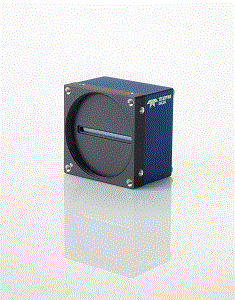
Teledyne DALSA Piranha4 Series is a model or family-specific imaging product. This source-based review distinguishes its documented acquisition and integration scope without claiming hands-on testing. Price: Request a quote.
The camera should be selected as part of an imaging system rather than evaluated from one headline specification. The useful result is an image that reveals the required feature at the right time, followed by a reliable inspection or measurement decision. This review considers the documented acquisition package, optical implications and practical purchasing scope for Piranha4 Series.
Quick Verdict
Piranha4 merits evaluation for synchronized inspection of moving surfaces. The catalog describes several monochrome and color line architectures, not one universal sensor. Spatial sampling across a line and sampling along the motion direction must be selected together. The 4k rate examples should not be assigned to every 8k color configuration or described as area-frame rates.
Piranha4 Series Technical Specifications
Specification | Value or configuration |
Product | Teledyne DALSA Piranha4 Series |
Image format | Model-specific image or derived output; see specification table |
Acquisition | Cmos Line Scan |
Interface | Camera Link |
Capture rate | Exact code, representation and operating point apply |
Architecture | CMOS line scan; exact linear arrangement applies |
Catalog sampling | 2k–8k across configurations |
Catalog rate examples | 4k 100/200 kHz; exact code and mode apply |
Color branches | Bilinear, trilinear or quadlinear are distinct configurations |
Interface | Camera Link in the identified manufacturer family scope |
Price | Request a quote |
Design and Optical Requirements
Choose line-scan optics, useful line width and illumination uniformity for the exact sensor. Multiple color rows observe displaced positions and require motion-aware alignment. Material height variation can affect reconstruction. A dense line does not prove geometric resolution along travel. Evaluate field edges, contrast and shading references using the actual moving surface.
Acquisition Speed and Integration
Synchronize capture with the actual object motion and qualified trigger or encoder method. Line rate is not area-frame rate, and aggregate multirow throughput is separate from useful spatial sampling. Confirm the Camera Link representation and receiver. Test speed changes, missing lines and row alignment rather than selecting from a maximum kHz headline.
Programming and Image Processing
The documented GenICam controls and correction features should be configured for the selected model. Preserve exposure, gain, shading, white balance and row alignment with the accepted reconstruction. An area or HDR mode changes the capture contract and should be validated separately. Test restoration of calibration and references after replacement rather than only reconnecting the receiver.
Image Data and Host Capacity
Budget the actual delivered image or channel representation and the paired operating rate. Derived data is not always one 8-bit value per sensor pixel. Include transport, buffers, correction, reconstruction or analysis and retained diagnostic evidence. A family maximum image and rate can describe different configurations. Test the full host workload using the accepted method.
Piranha4 Series Applications and Use Cases
Use the selected imaging method for inspection or measurement only after relevant information is observable. Prepare independent known-good and known-fault examples, including normal pose, lighting and material variation. Define the required completed result and its timing. A clear reference image or a sensor specification does not alone prove detection accuracy, metrology or reliable part association.
Building a Useful Acceptance Trial
Prepare representative parts or scenes that include the smallest required feature, normal production variation and realistic faults. Confirm the field of view and exposure before tuning the inspection. Record wrong accepts, wrong rejects, missing frames and the complete trigger-to-decision timing. A trial should also show what happens when the expected image is absent or unusable. This connects camera selection to the station's actual acceptance requirement rather than relying on a sharp reference picture.
Piranha4 Series Price and Value
Price: Request a quote. Ask for the complete Piranha4 Series ordering code and an itemized scope covering the camera, suitable optics, receiving hardware, cables, power and commissioning. Compare quotations for the same image format, acquisition mode and integration scope. The cost of a camera component is different from the cost of a working inspection station. Evaluate any financial return with the plant's actual labor, defect, rework and maintenance data; no universal payback period follows from these specifications.
Comparison and Selection
Compare the selected Piranha4 code with another line-scan method using the same moving field and accepted defect. Different mono, RGB and RGB-plus-NIR architectures observe different information. Do not combine a quadlinear spectral scope with a trilinear speed point. Include motion control and reconstruction responsibilities in the system comparison.
Ordering, Environment and Lifecycle
Confirm the full ordering code, sensor, mount, power, interface, firmware and supported software. Family branches and historical configurations can differ in installation and availability. Follow the delivered assembly’s environmental and thermal requirements. Preserve optics, illumination, acquisition controls and the accepted processing method together. Test restart and replacement against independent references so service restores the useful result rather than only communication.
Pros and Cons
Pros
Documented acquisition scope supports a focused configuration trial.
An explicit optical and receiving contract enables system planning.
Accepted references and preserved controls support reproducible service.
Cons
Family maxima and derived image outputs must remain model-specific.
Optics, representation and timing determine useful information.
Current compatibility, support and completed decisions need qualification.
Who Should Buy Piranha4 Series?
Shortlist Piranha4 Series when its documented sensor, interface and acquisition mode match the imaging task and the team can demonstrate the complete host pipeline. Use the sample trial to establish whether the relevant features remain distinguishable under the expected lighting, presentation and motion. Before purchase, settle the optical configuration, ordering variants and support requirements. The best choice is the configuration that satisfies the acceptance criteria with a maintainable system architecture.
Piranha4 Series FAQ
Which configuration does this review identify?
CMOS line scan; exact linear arrangement applies.
What imaging distinction matters?
2k–8k across configurations.
Does a family headline apply to every model?
No. Confirm the exact image, output and selected operating mode.
Does the interface prove software compatibility?
No. Qualify the supported receiver, driver and representation.
Does clear imaging establish defect detection?
No. Validate independent faults and normal variation.
Can settings change without requalification?
Changes can alter contrast, timing or interpretation; test the affected method.
What is the price?
Price: Request a quote for the exact product and complete integration.
What should acceptance verify?
Useful information, capture completeness, correct processing and restoration.
Price: Request a quote. Final configuration, pricing, availability and support terms depend on the supplier's current quotation.


