
Tecnotion ULX Ironless Linear Motor Yokes Review: Specs, Price and Applications

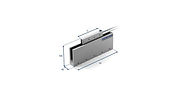
Tecnotion ULX combines a customized yoke with standard UL coils. The described magnetic structure increases in width from 28.4 to 42 mm, with an approximately 30% force increase for the referenced arrangement. It is an OEM linear-motor option rather than a complete guided stage.
Quick Verdict
Relevant where additional force can justify a wider track while retaining the UL coil platform. Confirm the complete coil, track and drive combination for the intended motion cycle.
Tecnotion ULX Ironless Linear Motor Yokes at a Glance
Specification | Details |
Coil platform | Standard UL coils |
Customized element | ULX magnetic yoke |
Referenced width change | 28.4 mm to 42 mm |
Force-change reference | Approximately 30% for the described arrangement |
Design and Engineering Assessment
The stated force increase describes the referenced magnetic arrangement. It does not automatically raise the winding’s continuous thermal allowance or the drive’s current capability.
A wider yoke changes the axis envelope and assembly forces. Evaluate track support, carriage clearance and the required air-gap alignment with the actual guide system.
Force and the Motion Cycle
A linear motor applies force directly to the moving mechanism without a screw or belt transmission. Select the motor against acceleration, external process forces and the repeated thermal duty. Peak force supports a transient interval, while continuous force depends on winding losses and cooling. The useful operating point belongs to the selected coil, magnetic track and drive configuration.
Ironless and iron-core arrangements create different magnetic and mechanical tradeoffs. An ironless design can avoid iron-related cogging, while an iron-core design can introduce attraction forces that affect guidance and mounting. Neither topology removes the need to control the air gap, support the moving load and provide a suitable position-measurement system.
Guidance, Feedback and Thermal Integration
The motor components do not usually provide a complete guided axis. Bearings, track support, structural alignment and the encoder mounting must be designed together. Magnetic assembly forces can be significant, so fixtures and a controlled installation procedure are part of the integration effort. Changes to track geometry also need to preserve the intended commutation relationship.
The encoder measures a particular point on the moving structure. Cable forces, carriage compliance and thermal drift can still influence the position or process result elsewhere on the load. Evaluate the useful measurement point and the complete error budget rather than assuming that a fine encoder increment establishes the same accuracy everywhere.
Control and Acceptance
The selected drive must support the winding and feedback arrangement and provide the necessary continuous and peak current. Establish direction, commutation and limits before enabling full motion. Tune the loaded mechanism and assess tracking, settling or constant-velocity behavior against the actual process requirement. Faster electronic updates cannot compensate for an inadequately supported track or flexible structure.
Acceptance should include representative load, stroke, velocity and stationary dwell at operating temperature. Check service routing through the entire travel envelope, including reference and fault-recovery movements. Retain the coil and track identities, encoder alignment, drive parameters and geometry so that a replacement can restore the qualified axis rather than merely its mechanical appearance.
Applications and Selection
Custom ironless linear axes using a qualified UL coil and modified track.
For Tecnotion ULX Ironless Linear Motor Yokes, define the actual machine duty before selecting an ordering configuration. Include the required operating point, available installation space, environment and control interfaces. The specification table describes the product or family; the surrounding machine determines which of those features matters for the intended job.
Price and Value
Price: Request a quote for the exact configuration. Compare the product, compatible control equipment, required mechanical parts, cabling and commissioning as one installed system. A component price alone does not represent the cost of a working automation axis.
Evaluate an alternative against the same duty and acceptance criteria. Match the continuous operating requirement first, then compare transient capability, feedback, mechanical fit and support. This avoids choosing between superficially similar products whose ratings describe different operating conditions.
Pros and Cons
Advantages
UL coil-platform continuity
Modified track for greater force capability
Limitations
Wider mechanical envelope
Coil and drive thermal limits remain relevant
Who Should Consider Tecnotion ULX Ironless Linear Motor Yokes?
Consider Tecnotion ULX Ironless Linear Motor Yokes for custom ironless linear axes using a qualified UL coil and modified track. Establish the required operating point and installation interfaces before choosing the configuration, and use a representative loaded cycle as the acceptance basis.
Tecnotion ULX Ironless Linear Motor Yokes FAQ
What is Tecnotion ULX Ironless Linear Motor Yokes?
Tecnotion ULX combines a customized yoke with standard UL coils.
Which specifications matter most?
Coil platform: Standard UL coils. Customized element: ULX magnetic yoke. Interpret the remaining ratings within the selected configuration and operating duty.
What applications should it be considered for?
Custom ironless linear axes using a qualified UL coil and modified track.
What is the main advantage?
UL coil-platform continuity. Modified track for greater force capability.
What limitation affects integration?
Wider mechanical envelope. Coil and drive thermal limits remain relevant.
What is the price?
Request a quote for the selected model, options and delivery terms. Any stated example price applies only to its identified seller configuration and may change.
How should an alternative be compared?
Use the same operating duty, installation envelope and acceptance requirements. Compare the complete system, including the compatible drive or controller, mechanical interfaces and commissioning effort.
What should be specified when ordering?
State the complete model or configuration, intended operating point, mechanical interfaces and required control equipment. Include the relevant environment, accessories and quantity so that the quotation describes a usable system.
Prices are indicative and may change. Confirm the final configuration, commercial terms and delivery schedule before ordering.


