
Radiant AR/VR Lens Review: Near-Eye Display Testing

Updated: 7 days ago
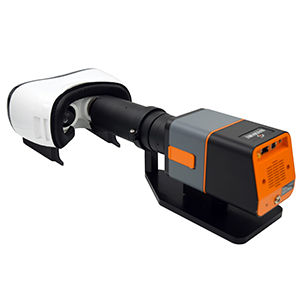
The Radiant AR/VR Lens is a specialized optical accessory for measuring near-eye displays through a compatible ProMetric imaging system. It places the entrance pupil at the front of the lens to support eye-position measurement geometry. Price: Request a quote.
Quick Verdict
The lens merits evaluation when a display must be assessed from inside a headset at the intended observer position. The entrance-pupil arrangement is the key distinction from a conventional imaging lens. Its value depends on an appropriate calibrated measurement system, a repeatable fixture and a test recipe that addresses the actual display requirements.
Documented Product Scope
Item | Configuration |
Product type | Near-eye display measurement lens accessory |
Aperture | 3.6 mm, positioned at front of lens |
Field of view | Up to 120° horizontal and 80° vertical |
Imaging scope | Compatible ProMetric photometer or colorimeter |
Software scope | TrueTest and application-specific TT-ARVR configuration |
Catalog supplier | Konica Minolta Sensing Americas |
Price | Request a quote |
Why Entrance-Pupil Position Matters
A headset can obstruct the view when the receiving system’s effective observation point is positioned behind bulky lens hardware. Locating the pupil near the intended eye position helps establish the required geometry. The fixture should reference the headset’s eye-relief and alignment conditions, then document the final camera-to-headset relationship. A clear image at one convenient position is not a substitute for the intended measurement geometry.
The fixed aperture represents one observation condition. Human pupils and eye positions vary, so the test plan should distinguish the specified nominal position from a broader evaluation of the eye box. If multiple positions are required, define how the system moves and how each measurement is registered. The lens specification alone does not establish complete coverage of every user position.
Field Coverage and Spatial Detail
Wide angular coverage can support an overall display evaluation, but feature sampling still depends on the attached imaging instrument and geometry. Determine whether the smallest relevant pixel, line or blemish remains measurable over the full view. Check the center and edges with the intended test patterns, focus setting and headset arrangement.
A full-field measurement and a high-detail component measurement can require different optical setups. The manufacturer describes exchanging this lens with standard optics on supported ProMetric systems. For the purchasing comparison, specify which tests must occur through the headset and which are performed on the display component separately. Include changeover and calibration requirements in the system design.
Measurement Instrument and Calibration
This listing is a lens, not a self-contained sensor or colorimeter. The compatible ProMetric instrument and its calibration determine the measurement chain. A photometer and a colorimeter do not provide identical information. Select the instrument around the required luminance and color quantities, uncertainty expectations and display characteristics.
Calibration should be tied to the complete optical configuration used for the test. Request the supplier’s supported lens/instrument pairing, calibration scope and validation method. Mechanical fit alone is insufficient evidence that an arbitrary camera can deliver the advertised measurement capability. Avoid transferring an instrument’s pixel count or exposure limits to the lens as though those were native lens specifications.
Software and Test Sequencing
The manufacturer pairs the lens with TrueTest and the TT-ARVR application module. Choose tests from the display acceptance requirements and confirm which software options are included in the proposal. A software test name does not by itself settle the pass/fail threshold, repeatability or suitability for the product being developed.
Store the fixture position, focus, instrument configuration and test patterns with each recipe. Establish how measurements are associated with a headset, display state and observation position. If the test sequence changes, verify the new setup with representative normal and faulty examples before using it for production acceptance.
Applications and Acceptance Trial
AR, VR and mixed-reality display development and quality assurance are appropriate areas to investigate. The trial should use the actual headset geometry, display content and defect requirements. Include uniform and patterned fields, realistic operating brightness and normal assembly variation. The important result is a repeatable measurement of the required display property, not just an attractive image.
Repeat measurements after removing and replacing the headset in the fixture. Check whether small position or focus changes alter the acceptance decision. If a production cycle is proposed, measure the complete sequence including fixture handling, display-state changes, acquisition, analysis and result storage. Do not substitute one exposure time for total station throughput.
Comparison and Purchasing Scope
Compare this pupil-positioned lens with a conventional optical arrangement using the same headset, measurement instrument and test requirements. Evaluate field obstruction, spatial detail and repeatability at the intended viewing position. A wider nominal field is useful only if the required display region remains measurable under the complete test setup.
Price: Request a quote. Ask for an itemized proposal covering the lens, compatible imaging instrument, supported mounting arrangement, software licenses, calibration, fixture and commissioning. Define which tests and observation positions are included. Compare proposals against the same acceptance plan and service requirements.
Who Should Evaluate the AR/VR Lens?
Shortlist it for teams responsible for near-eye display characterization or repeatable headset quality testing who can define the optical geometry and required measurement quantities. A complete demonstration should show that the selected instrument, lens, fixture and software satisfy those requirements. Settle compatibility and support before treating the accessory as a drop-in addition to an existing imaging station.
Pros and Cons
Pros
Front-pupil geometry supports measurement from the intended eye position.
Wide documented angular field for near-eye display work.
Manufacturer describes compatible instrument and software integration.
Cons
The lens requires a compatible measurement instrument.
A fixed observation condition does not establish an entire eye-box evaluation.
Calibration, fixture and software scope need explicit specification.
AR/VR Lens FAQ
Is this a standalone camera?
No. It is a lens accessory for compatible ProMetric imaging measurement systems.
What is the documented aperture?
The manufacturer specifies a 3.6 mm aperture at the front of the lens.
What field is described?
Up to 120° horizontal and 80° vertical; actual headset coverage requires evaluation.
Why is pupil position relevant?
The receiving system should view the display from the intended eye position without avoidable obstruction from its optical hardware.
Does the lens itself measure color?
Measurement capability depends on the attached compatible instrument, calibration and software.
Does one position cover the whole eye box?
No. Define the observation positions and test method required by the display specification.
What is the price?
Price: Request a quote for the complete lens, instrument, software, calibration and fixture scope.
What should acceptance verify?
Verify field coverage, spatial detail, measurement repeatability and the required display decision in the actual headset geometry.
Price: Request a quote. Exact configuration, availability and support depend on the current supplier proposal.


