
NIT WiDy SWIR 320 & 640 Review

Updated: 7 days ago
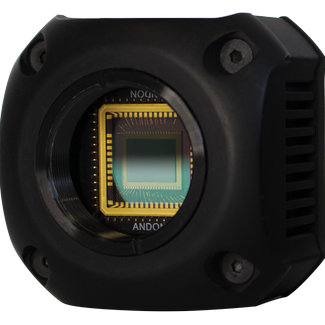
NIT WiDy SWIR 320 & 640 supplies a documented logarithmic SWIR imaging configuration. This source-based review distinguishes the model, acquisition and practical system scope without claiming hands-on testing. Price: Request a quote.
The product should be selected around the information and completed result required by the application. A headline specification is a starting point for integration, while optics, configuration, receiving and processing determine the useful outcome. This review examines documented scope and a practical acceptance method for WiDy SWIR 320 & 640.
Quick Verdict
WiDy SWIR 320 & 640 merits evaluation when historical 320 × 256 or 640 × 512 pixels and tecless high-dynamic-range ingaas architecture suit the required evidence. The catalog spans an older 320/640 family while the current dedicated product page describes WiDy SWIR 640. Its 100 Hz mode must not be assigned to the older 320 branch. WiDy SWIR differs from dual-response WiDy SenS. Select the complete ordering code rather than assigning one family maximum to every variant. The useful outcome is a reproducible image and accepted interpretation delivered at the required time. Assess sensor resolution and acquisition cadence with the complete optical and receiving configuration.
WiDy SWIR 320 & 640 Technical Specifications
Specification | Value or configuration |
Product | NIT WiDy SWIR 320 & 640 |
Image scope | Historical 320 × 256 or 640 × 512 pixels |
Sensor architecture | TECless high-dynamic-range InGaAs architecture |
Receiving | USB3, Camera Link, GigE or analog branch |
Rate scope | Current WiDy SWIR 640 page identifies 100 Hz |
Historical pitch | 320: 25 µm; 640: 15 µm |
Current 640 spectral response | 0.9–1.7 µm |
Response | Logarithmic HDR; catalog 120 dB claim |
Price | Request a quote |
Design and Optical Requirements
Select optics for the exact grid, pitch and wavelength range. TECless operation does not mean zero thermal dependence. An HDR headline does not establish that every optical condition can avoid clipping or yield useful detail. Choose useful field, working distance and smallest required feature together. The sampling grid alone does not establish optical resolving power or measurement uncertainty. Test focus, distortion, contrast and exposure with realistic surface, pose and lighting variation. A bright reference picture can hide glare, clipping or missing fine detail. Preserve the accepted optical geometry so a service adjustment does not silently change the information used by the inspection.
Acquisition Speed and Integration
Confirm frame rate, exposure, representation and receiving interface for the actual maintained or quoted code. Historical family choices are not a current availability commitment. Current WiDy SWIR 640 page identifies 100 Hz is the identified rate scope. USB3, Camera Link, GigE or analog branch determines the documented receiving architecture. Confirm representation, exposure, trigger behavior and receiver capacity together. A headline maximum is not a guarantee of completed decisions or retained recordings at that cadence. Qualify acquisition completeness and correct result association under sustained load, including disconnect, restart and invalid-image conditions.
Programming and Image Processing
Logarithmic output is not simply a linear intensity array with more bits. Confirm reference/correction and analysis interpretation. The manufacturer GUI/SDK contract varies by interface and product generation. Preserve exposure, gain, output format and supported corrections with the accepted analysis. Automatic adjustment or preprocessing can change thresholds or quantitative meaning. Confirm whether the application consumes raw samples, reconstructed channels or processed output. Version that contract with the receiving and analysis software, and evaluate changes against independent references before adopting them for production.
Data and Processing Capacity
Budget delivered spatial samples, channels, bytes per sample and acquisition cadence together. A family maximum may refer to another mode or branch; compressed and raw representations are not interchangeable evidence. Include transfer overhead, buffers, processing and retained references. For line or scanning acquisition, account for the motion dimension and reconstruction. Validate the sustained complete receiving workflow rather than assuming a port label establishes usable throughput.
WiDy SWIR 320 & 640 Applications and Use Cases
High-flux SWIR process observation or independently qualified material contrast can justify a trial when the required feature is distinguishable in the accepted image. Use representative normal variation and deliberately difficult cases. Keep independent validation examples separate from tuning samples and record wrong accepts, wrong rejects and unusable acquisitions. For quantitative measurement, qualify actual calibration against appropriate references. For classification, define how uncertain or unseen conditions are handled before treating the output as a production decision.
Building a Useful Acceptance Trial
Prepare representative parts or scenes that include the smallest required feature, normal production variation and realistic faults. Confirm geometry and acquisition before tuning the method. Record wrong accepts, wrong rejects, missing observations and complete result timing. A trial should also show what happens when expected information is absent or unusable. Connect selection to the actual acceptance requirement rather than relying on a sharp reference picture.
WiDy SWIR 320 & 640 Price and Value
Price: Request a quote. Ask for the complete WiDy SWIR 320 & 640 ordering code and an itemized scope covering the product, optics, receiving hardware, cables, power, software and commissioning as applicable. Compare quotations against the same accepted information and integration scope. A component price differs from an installed working station. Evaluate financial value using the operation's actual labor, defects, rework and maintenance data rather than inferring a universal payback period.
Comparison and Selection
Compare WiDy SWIR 320 & 640 with another supported imaging configuration using equal useful field, exposure and accepted output. The catalog spans an older 320/640 family while the current dedicated product page describes WiDy SWIR 640. Its 100 Hz mode must not be assigned to the older 320 branch. WiDy SWIR differs from dual-response WiDy SenS. Differences in sensor, interface, illumination, numerical representation or preprocessing can change the inspection contract. Include receiving hardware, optics, power, software and commissioning in equivalent quotations. A cheaper component or a higher maximum does not by itself establish a better complete station.
Ordering, Environment and Lifecycle
Request the current complete ordering code, datasheet, supported firmware/software and installation limits. Confirm which catalog features apply to the supplied variant, especially when archived and current descriptions differ. Preserve optics, acquisition controls, analysis configuration and independent references. Demonstrate supported replacement and restoration against the accepted trial. Mechanical fit or a compatible interface alone does not establish an equivalent image or decision after service.
Pros and Cons
Pros
The documented acquisition scope supports a focused sample trial.
Specific sensor and receiver choices enable concrete integration planning.
Preserved settings and references can support reproducible operation.
Cons
Maximum sampling and speed are not complete inspection performance.
Optics, lighting and delivered representation affect useful evidence.
Supported software and replacement scope need a precise quotation.
Who Should Buy WiDy SWIR 320 & 640?
Shortlist WiDy SWIR 320 & 640 only when its documented acquisition contract matches the information needed by the task. Establish useful contrast, actual timing and accepted interpretation with independent samples. For maintained legacy equipment, agree a supported service or replacement scope before procurement. Keep references and recovery steps with the operating configuration so a restart, new host or camera replacement can restore the same qualified evidence rather than merely display a live preview.
WiDy SWIR 320 & 640 FAQ
What sampling scope is identified?
Historical 320 × 256 or 640 × 512 pixels. Confirm the exact ordering configuration.
What sensor or architecture is described?
TECless high-dynamic-range InGaAs architecture.
Which receiving interface applies?
USB3, Camera Link, GigE or analog branch.
What acquisition rate is documented?
Current WiDy SWIR 640 page identifies 100 Hz. Validate the actual output and receiving mode.
Are nearby models automatically equivalent?
No. The catalog spans an older 320/640 family while the current dedicated product page describes WiDy SWIR 640. Its 100 Hz mode must not be assigned to the older 320 branch. WiDy SWIR differs from dual-response WiDy SenS.
Does an image utility supply an accepted detector?
No. Configure acquisition and independently validate task-specific interpretation.
What is the price?
Price: Request a quote for the exact imaging component, optics, receiving hardware, software and commissioning.
What should acceptance verify?
Useful detail, repeatability, correct interpretation, acquisition completeness, end-to-end timing and service restoration.
Price: Request a quote. Final configuration, availability and support terms depend on the supplier's current proposal.


