
Montech TB40 Conveyor Drive Variants Review: Specs, Price and Applications

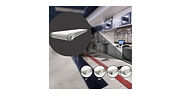
TB40 is a configurable belt conveyor with several matched load/speed drive variants. Montech’s current overview distinguishes 50 kg at 10–45 m/min,80 kg at 1–33.5 m/min and 200 kg at 0.25–12 m/min. These are different configurations;the 200 kg and 45 m/min family maxima cannot be combined into one conveyor rating.
Quick Verdict
Consider TB40 when a standardized conveyor can be configured for the product load, transfer geometry and process speed. Select drive, belt, length, width, orientation and controls together. The source’s revised angled motor connection improves packaging options, but does not remove clearance, strain-relief or environmental requirements.
Montech TB40 Conveyor Drive Variants at a Glance
Specification | Details |
Light-load /fast variant | 50 kg;10–45 m/min |
Intermediate variant | 80 kg;1–33.5 m/min |
Higher-load variant | 200 kg;0.25–12 m/min |
Speed tolerance | Apply selected manufacturer tolerance;current overview±10% |
Drive connection | Specified angled connection and selectable cable-exit orientation |
Controls/accessories | Actual drive data, operating unit and parameterization scope |
Selection | Belt, length, width, transfer, load distribution and drive code |
Design and Engineering Assessment
Conveyor load must be understood in its defined conveying condition. Incline, belt friction, acceleration and concentrated product loading can change required traction and drive torque. A total mass alone is not a complete application description.
The three variants trade speed and load through their selected drivetrain. Increasing a setpoint beyond the allowed range does not create another variant’s capability. Match the installed drive and accepted parameters to the configuration on the order drawing.
Cable-exit orientation can improve collision clearance, but the whole service path must remain protected. Include connector bend radius, maintenance access and the surrounding machine’s moving parts. An angled connector is a packaging feature rather than a universal collision-protection measure.
Configure Conveyor and Process Together
Specify product geometry, mass distribution, belt type, conveyor dimensions, speed and starts/stops. Include transfers, accumulation and any slope in the application review.
Identify the drive variant, cable exit, operating unit, network/control interface and permitted parameter changes. Select the actual belt and guarding arrangement for the product and environment.
Accept the Conveying Duty
Measure loaded belt speed, tracking, transfer behavior and thermal duty over the actual cycle. Verify product stability at acceleration and stopping.
Record the full conveyor/drive code, parameters, belt and tension/service procedure. Replacing only the motor or changing belt friction can alter the accepted load/speed behavior.
Applications and Selection
Industrial conveying and automated transfer processes with a documented product load and speed requirement.
For Montech TB40 Conveyor Drive Variants, define the actual machine duty before selecting an ordering configuration. Include the required operating point, available installation space, environment and control interfaces. The specification table describes the product or family; the surrounding machine determines which of those features matters for the intended job.
Price and Value
Price: Request a quote for the exact configuration. Compare the product, compatible control equipment, required mechanical parts, cabling and commissioning as one installed system. A component price alone does not represent the cost of a working automation axis.
Evaluate an alternative against the same duty and acceptance criteria. Match the continuous operating requirement first, then compare transient capability, feedback, mechanical fit and support. This avoids choosing between superficially similar products whose ratings describe different operating conditions.
Pros and Cons
Advantages
Defined load/speed configurations
Configurable conveyor and connection geometry
Supported parameterization and service scope
Limitations
Maximum load and maximum speed belong to different variants
Actual belt/geometry affects traction
Drive changes require complete configuration checks
Who Should Consider Montech TB40 Conveyor Drive Variants?
Consider Montech TB40 Conveyor Drive Variants for industrial conveying and automated transfer processes with a documented product load and speed requirement. Establish the required operating point and installation interfaces before choosing the configuration, and use a representative loaded cycle as the acceptance basis.
Montech TB40 Conveyor Drive Variants FAQ
Can TB40 convey 200 kg at 45 m/min?
Do not combine those maxima;the current overview assigns them to different drive variants.
Which variant reaches 45 m/min?
The described 50 kg configuration has a 10–45 m/min range.
Does a motor setpoint change the drive variant?
No. The actual drivetrain and permitted parameters govern.
Does total product mass fully define selection?
No. Distribution, friction, slope, acceleration and transfers also matter.
What does the angled connection change?
It changes connector exposure and cable-routing choices within the specified installation.
Is speed exact at every load?
Apply the selected speed tolerance and verify the installed loaded process.
What should a spare preserve?
Conveyor dimensions, belt, drive variant, cabling, control arrangement and parameters.
What should acceptance measure?
Loaded speed, tracking, product transfers, stability and thermal duty.
Prices are indicative and may change. Confirm the final configuration, commercial terms and delivery schedule before ordering.


