
Meridian Laboratory ROTOCON MXV High-Voltage and Wireline Slip Rings Review: Specs, Price and Applications

Updated: 4 days ago

ROTOCON MXV transfers configured high-voltage power and electrical signals across a rotating boundary. Meridian Laboratory also offers wireline versions for cable reels, with dedicated connector and flange arrangements. These are related configurations rather than interchangeable part numbers: voltage, channel count, current, terminations and mounting must be selected together.
Quick Verdict
Consider MXV for an electrical rotary connection above the ordinary M-series voltage range, particularly where a wireline reel needs a defined mounting and connector interface. Its strongest selection advantage is the availability of model-specific electrical tables. The principal limitation is that higher voltage, more channels and a familiar connector do not automatically preserve another model’s current rating.
Meridian Laboratory ROTOCON MXV High-Voltage and Wireline Slip Rings at a Glance
Specification | Details |
Role | High-voltage rotary electrical transfer; dedicated wireline configurations available |
MXV-2 / 1500 V | 2 contacts; 18 A/contact; 36 A/unit; 2.64 in body length; 2000 rpm maximum |
MXV-2 / 2500 V | 2 contacts; 7 A/contact; 14 A/unit; 2.94 in body length; 2000 rpm maximum |
MXV-2 / 3500 V | 2 contacts; 7 A/contact; 14 A/unit; 3.24 in body length; 2000 rpm maximum |
1500 V wireline examples | MXV-2-WG, MXV-2-SI and MXV-2-UHF: 2 contacts; 10 A/contact; 20 A/unit |
Wireline termination examples | WG: 4-pin MIL-spec; SI: 2-pin MIL-spec; UHF: table describes 2-pin BNC |
Voltage options | Current category: standard up to 3500 V AC/DC; optional up to 5000 V |
Housing and mounting | 304 stainless steel; end-of-shaft mounting, optional flanges |
Price | Request a quote for the complete configuration |
Design and Engineering Assessment
Compare the three two-contact voltage rows before using a family headline. The 1500 V entry lists 18 A per contact, whereas the 2500 V and 3500 V entries list 7 A. Body length also changes. The repeated 2000 rpm maximum does not make the three units electrically or mechanically identical.
A wireline label adds a separate ordering boundary. The published 1500 V WG, SI and UHF examples each list 10 A per contact and 20 A per unit, rather than the general MXV-2 / 1500 V row’s 18 A and 36 A. Selecting the connector by appearance and retaining the general model’s current would therefore be an incorrect specification.
The current high-voltage category describes options up to 5000 V. An older source announcement refers to custom 10 kV designs; that older figure is not used here as approval of a current standard unit. Any special build needs its own approved voltage, insulation, mechanical and environmental documentation.
A rotating connector is one part of a complete electrical path. The surrounding cable, stationary and rotating connectors, circuit protection and enclosure can impose a lower usable rating. Evaluate the assembled machine or reel at its real operating point rather than treating a connector headline as a system qualification.
Choosing the Voltage and Contact Map
Define every power, return, measurement and shield connection before assigning channels. Check both individual-contact loading and total-unit loading for the exact voltage and contact-count row. An unused contact is not permission to bridge channels without the supplier’s specified arrangement.
Separate normal operating voltage from the insulation and transient requirements of the installation. Agree the intended circuit arrangement with the supplier, including any mixed high- and low-voltage paths. A low-voltage data conductor sharing a rotary assembly still requires suitable routing and termination.
Wireline Variants and Reel Compatibility
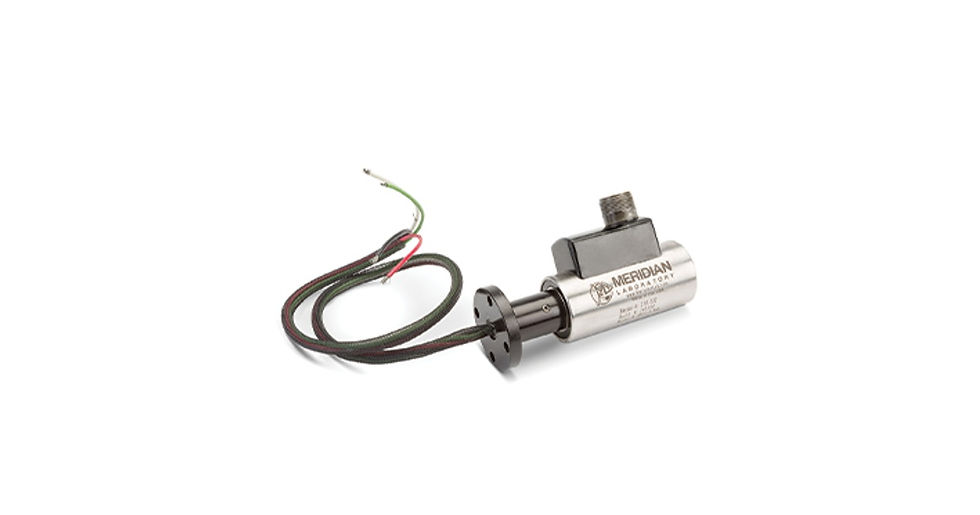
The wireline range is aimed at cable-reel applications, including logging. A replacement should be checked against flange dimensions, bolt pattern, shaft or mounting interface, torque restraint and the full connector designation. Similar-looking MIL-style connectors do not establish mating compatibility or identical pin assignments.
The WG, SI and UHF examples are distinct variants, not duplicate product names. Confirm mating hardware, cable construction and the approved electrical drawing. The table’s UHF model name should not be interpreted as an RF bandwidth guarantee for every attached cable or instrument.
Signal Integrity Through the Complete Path
The family can accommodate power and configured signal circuits, but it does not include an active network switch, fieldbus controller or measurement conditioner. Allocate the necessary conductors and agree the cable arrangement for the actual interface.
For small signals, test the complete circuit with the intended high-voltage load present. Look for offsets, interference and communication errors while rotating and during load changes. A stationary continuity check cannot establish the quality of the working measurement or data path.
Installation and Environmental Scope
Use the approved mounting and restraint instructions while supporting the reel or shaft independently. Provide strain relief and clearance for both rotating and stationary leads. Do not allow a cable bundle to become the structural torque restraint by accident.
The wireline construction is described as oil-filled and environmentally sealed. That description does not define every pressure, immersion, chemical or explosive-atmosphere requirement. Specify the actual exposure, cable entries and terminations; obtain the corresponding approval for the supplied assembly.
Commissioning and Buying Scope
Record the exact part number, voltage level, contact map, connectors and mounting drawing in the machine documentation. Agree appropriate electrical and functional acceptance procedures with the supplier and the responsible machine engineer. Avoid applying a generic test voltage to unknown connected instrumentation.
A useful quotation includes mating connectors, cable or lead lengths, mounting hardware, required environmental construction and any combined rotary interface. Compare complete installed scope and service access. An attractive base assembly price is not meaningful if a different termination or mechanical adapter is required.
Applications and Selection
High-voltage rotary machinery, logging cable reels, rotary etching and instrumentation
For Meridian Laboratory ROTOCON MXV High-Voltage and Wireline Slip Rings, define the actual machine duty before selecting an ordering configuration. Include the required operating point, available installation space, environment and control interfaces. The specification table describes the product or family; the surrounding machine determines which of those features matters for the intended job.
Price and Value
Price: Request a quote for the exact configuration. Compare the product, compatible control equipment, required mechanical parts, cabling and commissioning as one installed system. A component price alone does not represent the cost of a working automation axis.
Evaluate an alternative against the same duty and acceptance criteria. Match the continuous operating requirement first, then compare transient capability, feedback, mechanical fit and support. This avoids choosing between superficially similar products whose ratings describe different operating conditions.
Pros and Cons
Advantages
Model tables distinguish voltage-dependent current and envelope
Dedicated wireline versions support different reel termination arrangements
Configured power and signal paths can share a rotary assembly
Limitations
General and wireline model current ratings are different
Older custom-voltage announcements do not qualify current standard units
Reel, cable, connector and environmental compatibility require exact drawings
Who Should Consider Meridian Laboratory ROTOCON MXV High-Voltage and Wireline Slip Rings?
machine builders selecting a configuration-specific rotating electrical interface
Meridian Laboratory ROTOCON MXV High-Voltage and Wireline Slip Rings FAQ
Do all two-contact MXV units have the same current rating?
No. The cited general 1500 V row lists 18 A/contact, while the 2500 V and 3500 V rows list 7 A/contact. Use the exact voltage and model row.
Can the general 1500 V current be assigned to a wireline version?
No. The published MXV-2-WG, MXV-2-SI and MXV-2-UHF examples list 10 A/contact and 20 A/unit at 1500 V.
Are WG, SI and UHF genuine duplicate products?
No. They identify different wireline termination arrangements. Preserve separate ordering identities and confirm mating connectors and pin assignments.
Is 10 kV a standard current MXV rating?
This review does not make that claim. The current category describes standard options up to 3500 V and optional configurations up to 5000 V. Higher special builds need explicit approval.
Does an electrical channel count define an Ethernet connection?
No. An appropriate circuit count, cable arrangement and terminations are required. External network equipment remains separate.
Does a sealed wireline construction prove suitability at any depth?
No. Specify the actual immersion, pressure, media and termination conditions for the ordered assembly. A general sealing statement is insufficient.
Can the connector replace the reel’s structural bearings?
Do not assume that function. Provide the reel and shaft support and use the approved connector mounting and restraint arrangement.
What information should accompany a quotation?
Provide voltage and loading, contact map, speed and duty, connector and flange drawings, cable requirements, environment and the intended acceptance procedure.
Prices are indicative and may change. Confirm the final configuration, commercial terms and delivery schedule before ordering.


