
Innodisk EVDM-OOM1-RHCF MIPI Camera Review

Updated: 7 days ago
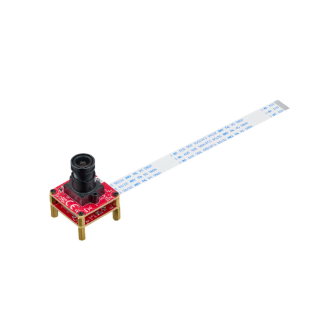
Innodisk EVDM-OOM1-RHCF is a fixed-focus MIPI CSI-2 embedded camera module. This source-based review evaluates its identified color image and platform integration without claiming hands-on testing. Price: Request a quote.
The camera should be selected as part of an imaging system rather than evaluated from one headline specification. The useful result is an image that reveals the required feature at the right time, followed by a reliable inspection or measurement decision. This review considers the documented acquisition package, optical implications and practical purchasing scope for EVDM-OOM1-RHCF.
Quick Verdict
EVDM-OOM1-RHCF merits evaluation for embedded imaging when the 13 MP at 20 fps operating point and rolling shutter suit the scene. The manufacturer identifies the onsemi AR1335 and an integrated ISP. The module supplies images; it does not include a validated edge-AI application simply because the catalog lists AI-capable platforms.
EVDM-OOM1-RHCF Technical Specifications
Specification | Value or configuration |
Product | Innodisk EVDM-OOM1-RHCF |
Image format | 13 MP in the identified configuration |
Acquisition | Rolling |
Interface | MIPI CSI-2 |
Capture rate | 13 MP at up to 20 fps |
Module | 13 MP fixed-focus color |
Sensor | onsemi AR1335 |
Shutter | rolling |
Maximum identified point | 13 MP at 20 fps |
Output | MIPI CSI-2; YUV422 |
Lens FOV D/H/V | 91° / 71° / 52° |
Listed platforms | NVIDIA Jetson Orin and Intel |
Price | Request a quote |
Design and Optical Requirements
The identified fixed-focus lens has a diagonal, horizontal and vertical field of 91° / 71° / 52°. Evaluate working distance, distortion and edge detail in the installed arrangement. A wide angular field spreads sampling over the scene. Fixed focus is not automatic refocusing for every object distance. Choose actual required features before selecting from megapixel count alone.
Acquisition Speed and Integration
Qualify the host connector, lane configuration, cable, driver and selected output mode together. Rolling readout requires motion and changing-light trials; HDR does not remove those timing effects. Measure delivered images and complete processing under real workload. A supported platform name does not guarantee every board revision or operating-system combination.
Programming and Image Processing
The documented scope includes HDR and pixel binning and an integrated ISP. Preserve the accepted image controls and host processing recipe together. ISP tuning can change contrast and quantitative interpretation, so validate changes against independent scenes. Confirm the supplied driver, supported controls and reproducible software image for the exact embedded board. A platform support listing is the starting point for integration qualification.
Image Data and Host Capacity
Budget the actual delivered image dimensions and YUV422 representation at the selected rate. YUV422 should not be budgeted as a single 8-bit grayscale value per pixel. Include MIPI receiver buffers, preprocessing, inference and retained diagnostic images. Binning or another mode changes the information and throughput scope. Verify receiving and complete results under the final host workload.
EVDM-OOM1-RHCF Applications and Use Cases
Embedded visual inspection, robot perception or another scene task can merit a configured trial. Start with independent representative scenes and the faults or objects that matter. HDR settings should be tested against both highlights and dark features; a dynamic-range headline is not a guaranteed defect contrast. Validate complete decisions after preprocessing and any inference.
Building a Useful Acceptance Trial
Prepare representative parts or scenes that include the smallest required feature, normal production variation and realistic faults. Confirm the field of view and exposure before tuning the inspection. Record wrong accepts, wrong rejects, missing frames and the complete trigger-to-decision timing. A trial should also show what happens when the expected image is absent or unusable. This connects camera selection to the station's actual acceptance requirement rather than relying on a sharp reference picture.
EVDM-OOM1-RHCF Price and Value
Price: Request a quote. Ask for the complete EVDM-OOM1-RHCF ordering code and an itemized scope covering the camera, suitable optics, receiving hardware, cables, power and commissioning. Compare quotations for the same image format, acquisition mode and integration scope. The cost of a camera component is different from the cost of a working inspection station. Evaluate any financial return with the plant's actual labor, defect, rework and maintenance data; no universal payback period follows from these specifications.
Comparison and Selection
Compare this module with another MIPI configuration or an externally connected camera using the same useful scene and accepted processing result. NVIDIA Jetson Orin and Intel are listed platforms, while actual driver and board qualification remain separate. Include integration labor, supported camera modes and reproducible service. A faster or denser module can still deliver less useful information in the wrong optical arrangement.
Ordering, Environment and Lifecycle
Confirm the complete ordering suffix, lens, housing, FFC/FPC cable and software image. The manufacturer lists several packaging or customization possibilities; do not assume all are included in one quote. Preserve the accepted driver, host firmware, image controls and processing together. Test replacement and restart with the final embedded platform.
Pros and Cons
Pros
A specified sensor and paired image-rate point support focused evaluation.
Integrated ISP and MIPI output provide a concrete embedded architecture.
A fixed optical configuration can be qualified with the actual scene.
Cons
Platform names alone do not prove board and driver compatibility.
Fixed optics, shutter and ISP settings influence useful information.
The image module does not establish a complete AI or inspection result.
Who Should Buy EVDM-OOM1-RHCF?
Shortlist EVDM-OOM1-RHCF when its documented sensor, interface and acquisition mode match the imaging task and the team can demonstrate the complete host pipeline. Use the sample trial to establish whether the relevant features remain distinguishable under the expected lighting, presentation and motion. Before purchase, settle the optical configuration, ordering variants and support requirements. The best choice is the configuration that satisfies the acceptance criteria with a maintainable system architecture.
EVDM-OOM1-RHCF FAQ
What sensor is identified?
onsemi AR1335.
What maximum point is described?
13 MP at 20 fps; confirm the actual mode and driver.
What shutter is used?
Rolling shutter; validate exposure and scene motion.
What receiving interface applies?
MIPI CSI-2; qualify connector, cable, lane setup and host driver.
Does fixed focus mean every distance is sharp?
No. Validate the installed working geometry.
Is a validated AI application included?
No. Image acquisition and the accepted processing task are separate.
What is the price?
Price: Request a quote for the module, optics, host and commissioning.
What should acceptance verify?
Useful scene information, complete receiving, correct processing and recovery.
Price: Request a quote. Final configuration, pricing, availability and support terms depend on the supplier's current quotation.


