
Imperx T3340 Review: Specs & Applications

Updated: 7 days ago
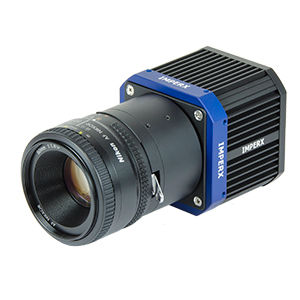
Imperx T3340 uses the onsemi KAI-08051 interline CCD with Camera Link Medium output. The manufacturer model overview lists 3296 × 2472. Price: Request a quote.
The camera should be selected as part of an imaging system rather than evaluated from one headline specification. The useful result is an image that reveals the required feature at the right time, followed by a reliable inspection or measurement decision. This review considers the documented acquisition package, optical implications and practical purchasing scope for T3340.
Quick Verdict
T3340 provides an eight-megapixel-class rectangular CCD field and a listed twenty-one-frame-per-second model configuration. It is a useful reference for an installed Tiger system or a deliberately specified CCD inspection path. Its value depends on useful optical detail and the receiving configuration fitting the station cycle.
T3340 at a Glance
Product: Imperx T3340
Image format: 3296 × 2472
Acquisition: Electronic Exposure; Interline Ccd
Interface: Camera Link Medium
Capture rate: Up to 21 fps in model overview
Sensor: onsemi KAI-08051 interline CCD
Optical format: 4/3-inch
Version choices: Ruggedized or industrial configuration
Lifecycle: Tiger CCD portfolio listed as legacy
Price: Request a quote
T3340 Technical Specifications
Specification | Value or configuration |
Product | Imperx T3340 |
Image format | 3296 × 2472 |
Acquisition | Electronic Exposure; Interline Ccd |
Interface | Camera Link Medium |
Capture rate | Up to 21 fps in model overview |
Sensor | onsemi KAI-08051 interline CCD |
Optical format | 4/3-inch |
Version choices | Ruggedized or industrial configuration |
Lifecycle | Tiger CCD portfolio listed as legacy |
Price | Request a quote |
Design and Optical Requirements
The 4/3-inch optical format should be covered by a lens that preserves contrast across the 3296 by 2472 grid. Set working distance and field of view from the actual target. Edge focus, distortion and normal height variation deserve the same attention as the center. Calibration is a separate requirement for a measurement fixture.
Acquisition Speed and Integration
The manufacturer model overview gives up to 21 fps in model overview. A Camera Link Medium receiver and its camera-control settings must match the selected image output. Specify exposure, output representation and the actual image region, then measure acquisition-to-decision timing. Interline CCD exposure should be evaluated from its own documented readout behavior rather than a substituted CMOS specification.
Programming and Image Processing
The documented capabilities include programmable image region, trigger inputs, strobe outputs, temperature monitoring, programmable exposure and gain, raw image access. Use those controls to establish a repeatable acquisition recipe for the station. Determine which adjustments are performed in the camera and which belong in the host software. Store the chosen settings with the inspection configuration so an operator or service technician can reproduce the image used during commissioning. A parameter change should be evaluated against both good and faulty samples before it becomes the production default.
Image Data and Host Capacity
As an engineering estimate, a 3296 × 2472 frame represented as one uncompressed 8-bit value per pixel contains about 8.15 MB of pixel data, using decimal megabytes. This excludes transport overhead and metadata. It is a sizing example, not a measured camera transfer rate; other output representations change the data volume. Multiply the selected frame size by the planned acquisition rate when budgeting host memory, processing and storage, then validate the complete pipeline under realistic load.
T3340 Applications and Use Cases
Component verification, controlled surface inspection and calibrated fixture measurement are possible trial directions. Include actual good parts, required faults and normal surface variation. For motion, evaluate exposure and illumination on the moving target. The decision pipeline must also define how unusable or absent images are handled.
Building a Useful Acceptance Trial
Prepare representative parts or scenes that include the smallest required feature, normal production variation and realistic faults. Confirm the field of view and exposure before tuning the inspection. Record wrong accepts, wrong rejects, missing frames and the complete trigger-to-decision timing. A trial should also show what happens when the expected image is absent or unusable. This connects camera selection to the station's actual acceptance requirement rather than relying on a sharp reference picture.
T3340 Price and Value
Price: Request a quote. Ask for the complete T3340 ordering code and an itemized scope covering the camera, suitable optics, receiving hardware, cables, power and commissioning. Compare quotations for the same image format, acquisition mode and integration scope. The cost of a camera component is different from the cost of a working inspection station. Evaluate any financial return with the plant's actual labor, defect, rework and maintenance data; no universal payback period follows from these specifications.
Comparison and Selection
T3340 and T3640 have different sensor grids, optical-format classes and listed capture rates. Camera Link and CXP variants also use different receiving architectures. A modern CMOS replacement may change response, timing and calibration requirements. Compare representative images and supported system scope rather than matching megapixels alone.
Ordering, Environment and Lifecycle
The current model overview and other Tiger portfolio tables contain mode or rate differences. This review labels the model-overview specification explicitly. Request the confirmed current grid, rate, version, lens mount and support terms in the quotation. Ruggedized and industrial options should not be assumed to have identical controls or environmental limits.
Pros and Cons
Pros
Documented 3296 by 2472 image grid.
Defined interline CCD acquisition architecture.
Specified Camera Link Medium receiving path.
Cons
Legacy lifecycle needs current supplier confirmation.
Complete output mode can differ from a summary specification.
Optics and decision timing require application validation.
Who Should Buy T3340?
Shortlist T3340 when its documented sensor, interface and acquisition mode match the imaging task and the team can demonstrate the complete host pipeline. Use the sample trial to establish whether the relevant features remain distinguishable under the expected lighting, presentation and motion. Before purchase, settle the optical configuration, ordering variants and support requirements. The best choice is the configuration that satisfies the acceptance criteria with a maintainable system architecture.
T3340 FAQ
What is the native resolution of T3340?
3296 × 2472 pixels is the documented native image format. Evaluate the optics and required feature scale alongside that pixel count.
Which shutter architecture does it use?
The model is an interline CCD camera with programmable electronic exposure. Confirm exposure and readout timing for the chosen image output.
What interface is required?
Camera Link Medium is the documented acquisition interface. Match the receiving hardware and software to the exact ordering configuration.
What is the maximum frame rate?
The documented rate is Up to 21 fps in model overview. Confirm the specified operating mode; maximum capture rate is not a guarantee of completed inspection throughput.
Which acquisition features are documented?
The product information includes programmable image region, trigger inputs, strobe outputs, temperature monitoring, programmable exposure and gain, raw image access. Configure the selected functions around the actual trigger and image-processing requirement.
What should be included in a system comparison?
T3340 and T3640 have different sensor grids, optical-format classes and listed capture rates. Camera Link and CXP variants also use different receiving architectures. A modern CMOS replacement may change response, timing and calibration requirements. Compare representative images and supported system scope rather than matching megapixels alone.
How much does the camera cost?
Price: Request a quote. Include the exact camera variant, optics, receiving hardware, power, cables and commissioning.
What should be tested before ordering?
Test representative good and faulty samples, the intended optical geometry, image timing, capture diagnostics and the complete result association with each inspected part.
Price: Request a quote. Final configuration, pricing, availability and support terms depend on the supplier's current quotation.


