
Imperx C4180 Cheetah Review: Specs & Applications

Updated: 7 days ago
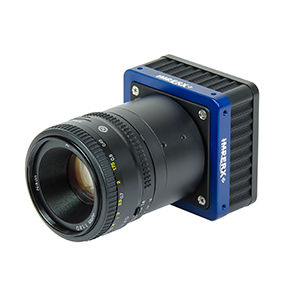
The Imperx C4180 family uses a Python global-shutter CMOS sensor with a native 4096 × 3072 image and a 4/3-inch optical format. Price: Request a quote.
C4180 appears on Imperx's legacy-products page, which makes lifecycle planning part of the purchasing decision. The model also exists in several interface configurations. A review that assigns the fastest advertised frame rate to every version would obscure the engineering question: which ordering code, acquisition mode and host system can reproduce the required result? This review examines the family and its selection constraints.
Quick Verdict
C4180 is most relevant to buyers evaluating an established camera architecture, a replacement requirement or a legacy imaging system. Its documented 12 MP Python sensor provides a clear basis for optical and acquisition planning. The key limitations are interface-dependent timing and lifecycle confirmation. For a new design, ask Imperx to compare the required configuration with a supported current alternative before standardizing the system.
C4180 at a Glance
Family: Imperx C4180
Sensor family: Python NOIP1xx012KA global-shutter CMOS
Native resolution: 4096 × 3072
Optical format: 4/3-inch
Documented interface variants: Camera Link, GigE Vision, CoaXPress and 10GigE Vision
Frame rate: Depends on interface, bit depth and acquisition settings
Camera Link documentation example: Up to 67 fps in the manufacturer's Camera Link material
CXP documentation example: 90 fps at 8-bit; 72.9 fps at 10-bit
Lifecycle: Listed under Imperx Legacy Products
Price: Request a quote
C4180 Technical Specifications
Specification | Documented value |
Family | Imperx C4180 |
Sensor family | Python NOIP1xx012KA global-shutter CMOS |
Native resolution | 4096 × 3072 |
Optical format | 4/3-inch |
Documented interface variants | Camera Link, GigE Vision, CoaXPress and 10GigE Vision |
Frame rate | Depends on interface, bit depth and acquisition settings |
Camera Link documentation example | Up to 67 fps in the manufacturer's Camera Link material |
CXP documentation example | 90 fps at 8-bit; 72.9 fps at 10-bit |
Lifecycle | Listed under Imperx Legacy Products |
Price | Request a quote |
Design and Build Quality
Treat C4180 as a family designation and identify the complete ordering code. An installed system may depend on a particular lens mount, spectral configuration or connector arrangement. A replacement that shares the model number but changes an interface is not automatically a drop-in replacement. Photograph or record the installed ordering code and compare the mechanical drawing before purchasing a substitute.
Optics and the 4/3-Inch Format
The documented 4/3-inch optical format differs from a smaller-format camera even when the megapixel counts are similar. Lens image-circle coverage and the station's field of view are part of the comparison. Test feature visibility across the image, especially if the lens was originally selected for a different sensor. Moving the camera to preserve a field of view can also change illumination and perspective.
Global Shutter and Motion
The sensor uses a global shutter. This helps establish a common exposure interval across the image, while exposure duration still affects motion blur. A moving-object installation needs a coordinated trigger and illumination arrangement. The appropriate test is whether the important feature remains usable at the required speed, not whether the camera can generate frames at its maximum specification.
Programming and Image Data
The product listing describes trigger inputs, strobe outputs, exposure and gain controls, lookup-table functions and access to raw data. Preserve the intended acquisition recipe when maintaining a legacy station. A change in image corrections or gain can alter the appearance of the defect used by an existing algorithm. Compare results using the same samples and inspection thresholds before accepting a replacement.
Choosing the Interface
Imperx's legacy listing identifies Camera Link, GigE Vision, CoaXPress and 10GigE variants. These correspond to different host architectures and should be compared by exact ordering code. Identify the existing frame grabber or network interface, its driver and the application's acquisition library. A sensor match alone does not establish software or electrical compatibility.
Frame Rate and Bit Depth
The maximum rate is configuration dependent. The manufacturer's Camera Link material describes up to 67 fps, while the CXP manual specifies 90 fps at 8-bit and 72.9 fps at 10-bit for C4180. Those values should not be collapsed into one universal rating. Select the bit depth required by the imaging task and test the corresponding complete acquisition mode.
Applications and Use Cases
The supplier positions C4180 for machine vision and other imaging applications, including aerial and traffic imaging. For industrial inspection, demonstrate the required feature at the chosen field of view and lighting. For moving-scene acquisition, validate exposure, synchronization and buffering. Application-specific acceptance or certification belongs to the final system and cannot be inferred from the camera's marketed use cases.
Legacy Lifecycle and Maintenance
A legacy-product listing is a reason to request current lifecycle and support information. It does not, on its own, prove that every configuration is unavailable. Ask about supply, repair policy, supported drivers and a recommended replacement path. For a long-lived machine, consider how the camera, acquisition board and operating system will be maintained together.
Price and Value
Price: Request a quote. Specify whether the purchase concerns a new unit, a replacement or support for an existing station. Include the exact interface and optical configuration. Compare the cost of preserving the current acquisition architecture with the engineering cost of moving to a current camera. A lower component price can be outweighed by software and fixture changes.
Comparison with CLF-C4120
CLF-C4120 uses Sony IMX253 at 4112 × 3008 in a 1.1-inch optical format, with up to 42 fps documented for Camera Link. C4180 uses the Python sensor and a 4/3-inch format. Those differences make lens coverage, timing and acquisition compatibility important even though both are described as 12 MP cameras. Evaluate them against the actual station requirement rather than ranking megapixels alone.
Who Should Buy C4180?
Shortlist it when the requirement is tied to an existing C4180 installation or a known interface-specific imaging design. For a new project, obtain a current lifecycle recommendation and compare the complete acquisition architecture with a current alternative. The strongest purchasing case is compatibility demonstrated with representative images and the intended host software.
Pros and Cons
Pros
Documented 4096 × 3072 global-shutter sensor.
Several interface configurations support different acquisition architectures.
Raw-data access and configurable acquisition controls are documented.
Cons
Legacy lifecycle requires current supplier confirmation.
Frame rates cannot be generalized across interface and bit-depth settings.
Replacement compatibility includes optics, host hardware and software.
C4180 FAQ
What is the resolution?
Imperx documents 4096 × 3072 pixels for the C4180 Python sensor.
Which sensor does it use?
The documented sensor is the Python NOIP1xx012KA global-shutter CMOS family.
Is C4180 a current product?
Imperx includes C4180 on its legacy-products page. Ask the supplier for current supply, support and replacement guidance.
Does every C4180 run at 90 fps?
No. Frame rate depends on interface and settings. The CXP manual specifies 90 fps at 8-bit and 72.9 fps at 10-bit.
Which interfaces are documented?
The legacy listing identifies Camera Link, GigE Vision, CoaXPress and 10GigE Vision variants. Confirm the exact ordering code.
Can it replace C4120 without changes?
Do not assume that. Sensor, optical format, interface and acquisition behavior differ and need comparison.
What is the price?
Price: Request a quote for the exact configuration and purchase scope.
What should a replacement trial include?
It should compare optics, captured images, acquisition timing, driver compatibility and the existing inspection decisions using representative production samples.
Price: Request a quote. Confirm the exact configuration, current availability, support terms and acquisition-system scope with the supplier.


