
IDS Ensenso and Nion 3D Cameras Review

Updated: 7 days ago
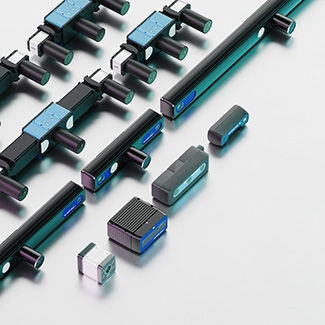
IDS supplies Ensenso stereo 3D families and the Nion time-of-flight camera for industrial and robot vision. Their sensing and processing architectures differ, so the catalog is a selection portfolio rather than one fixed camera specification. Price: Request a quote.
The camera should be selected as part of an imaging system rather than evaluated from one headline specification. The useful result is an image that reveals the required feature at the right time, followed by a reliable inspection or measurement decision. This review considers the documented acquisition package, optical implications and practical purchasing scope for 3D Camera Portfolio.
Quick Verdict
The portfolio merits evaluation when the task requires object geometry, position or surface depth rather than only an intensity image. Choose the measurement architecture and working volume first. The meaningful result is sufficiently complete and reliable 3D information for the intended robot or inspection decision, with processing placed where the system can support it.
3D Camera Portfolio at a Glance
Product: IDS Ensenso and Nion 3D Cameras
Image format: Model-specific depth maps and point clouds; separate texture formats where provided
Acquisition: Stereo Or Time-Of-Flight Depth Acquisition
Interface: Model-specific; Nion uses GigE Vision integration
Capture rate: Model and depth-computation configuration dependent
Ensenso architecture: Stereo 3D families with model-specific projector and calculation options
Nion architecture: Time-of-flight depth camera; listed 1.2MP depth image
Ensenso B: Close-range family
Ensenso C / CR: Color 3D; CR includes on-camera depth calculation
Ensenso X / XR: Modular system choices; embedded options depend on model
Price: Request a quote
3D Camera Portfolio Technical Specifications
Specification | Value or configuration |
Product | IDS Ensenso and Nion 3D Cameras |
Image format | Model-specific depth maps and point clouds; separate texture formats where provided |
Acquisition | Stereo Or Time-Of-Flight Depth Acquisition |
Interface | Model-specific; Nion uses GigE Vision integration |
Capture rate | Model and depth-computation configuration dependent |
Ensenso architecture | Stereo 3D families with model-specific projector and calculation options |
Nion architecture | Time-of-flight depth camera; listed 1.2MP depth image |
Ensenso B | Close-range family |
Ensenso C / CR | Color 3D; CR includes on-camera depth calculation |
Ensenso X / XR | Modular system choices; embedded options depend on model |
Price | Request a quote |
Design and Optical Requirements
Working distance, field of view, occlusion and surface response govern the 3D arrangement. An Ensenso stereo model and a Nion ToF camera should be tested on the same relevant objects when comparing them. Include dark, reflective or partially hidden features present in the actual application. Calibration to the robot or measurement coordinate frame is separate from obtaining a point cloud.
Acquisition Speed and Integration
IDS describes model-specific host or embedded depth-processing choices. Ensenso CR includes on-camera depth calculation, while Nion is presented with GigE Vision integration and depth, confidence and point-cloud workflows. Define acquisition-to-decision latency for the exact mode. Camera frame rate, depth calculation time and robot cycle time are different quantities.
Programming and Image Processing
The documented capabilities include depth-map acquisition, point-cloud generation through the selected software, model-specific color texture, confidence information in the described Nion workflow. Use those controls to establish a repeatable acquisition recipe for the station. Determine which adjustments are performed in the camera and which belong in the host software. Store the chosen settings with the inspection configuration so an operator or service technician can reproduce the image used during commissioning. A parameter change should be evaluated against both good and faulty samples before it becomes the production default.
Image Data and Host Capacity
Budget the actual depth-map or point-cloud representation, optional color texture and chosen output rate. A point cloud may contain multiple coordinates and attributes per valid point, so a conventional 8-bit intensity-frame estimate does not describe its workload. Include depth calculation, filtering, robot-coordinate conversion and retained diagnostic data in host and network evaluation.
3D Camera Portfolio Applications and Use Cases
Bin picking, assembly guidance and geometric inspection can merit representative trials. A picking trial needs more than a visually dense cloud: test object localization, pose validity, inaccessible features and how the system handles insufficient data. For metrology, establish traceable reference artifacts and repeatability requirements suited to the actual measurement.
Building a Useful Acceptance Trial
Prepare representative parts or scenes that include the smallest required feature, normal production variation and realistic faults. Confirm the field of view and exposure before tuning the inspection. Record wrong accepts, wrong rejects, missing frames and the complete trigger-to-decision timing. A trial should also show what happens when the expected image is absent or unusable. This connects camera selection to the station's actual acceptance requirement rather than relying on a sharp reference picture.
3D Camera Portfolio Price and Value
Price: Request a quote. Ask for the complete Ensenso and Nion 3D Cameras ordering code and an itemized scope covering the camera, suitable optics, receiving hardware, cables, power and commissioning. Compare quotations for the same image format, acquisition mode and integration scope. The cost of a camera component is different from the cost of a working inspection station. Evaluate any financial return with the plant's actual labor, defect, rework and maintenance data; no universal payback period follows from these specifications.
Comparison and Selection
Ensenso B addresses close range, C supplies colored 3D, CR embeds depth calculation, and X/XR provide other system layouts. Nion uses ToF rather than stereo matching. These differences change installation geometry, processing and failure modes. Do not transfer a working distance, depth grid or maximum rate from one model to the entire portfolio.
Ordering, Environment and Lifecycle
Quote the exact camera or system code, working volume, optics, calibration, supported SDK and computation scope. Ask the supplier to evaluate representative objects and provide the chosen mode’s data. An industrial vision camera is not automatically a safety-rated protective sensor; its role in the machine must be defined accordingly.
Pros and Cons
Pros
Several 3D architectures for different working volumes.
Stereo and ToF choices within one supplier portfolio.
Model-specific embedded calculation and color texture options.
Cons
Family-level descriptions do not specify one system.
Surface response, occlusion and calibration need application testing.
Robot integration requires coordinate conversion and decision validation.
Who Should Buy 3D Camera Portfolio?
Shortlist 3D Camera Portfolio when its documented sensor, interface and acquisition mode match the imaging task and the team can demonstrate the complete host pipeline. Use the sample trial to establish whether the relevant features remain distinguishable under the expected lighting, presentation and motion. Before purchase, settle the optical configuration, ordering variants and support requirements. The best choice is the configuration that satisfies the acceptance criteria with a maintainable system architecture.
3D Camera Portfolio FAQ
Is this one IDS camera model?
No. The supplied listing covers several Ensenso families and Nion.
What is the main architecture difference?
Ensenso is presented as stereo 3D, while Nion uses time-of-flight depth sensing.
Does every model calculate depth onboard?
No. The manufacturer identifies particular embedded families, including CR; confirm the selected system.
What depth resolution is given for Nion?
The portfolio page lists 1.2MP depth images for Nion, not for every Ensenso model.
Which family is positioned for close range?
Ensenso B is presented as the close-range family.
Does a point cloud alone solve bin picking?
No. The application also needs reliable object pose, robot-coordinate calibration and defined handling of insufficient data.
What is the price?
Price: Request a quote for the exact 3D camera or system, calibration, processing and integration.
What should a trial verify?
Verify useful geometry, completeness, repeatability, latency and the actual robot or inspection result on representative objects.
Price: Request a quote. Final configuration, pricing, availability and support terms depend on the supplier's current quotation.


