
Harmonic Drive Precision Harmonic Planetary Gearheads Review: Specs, Price and Applications

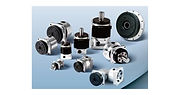
Harmonic Planetary precision gearheads use an elastically compliant internal gear arrangement to support low-backlash planetary reduction. The supplied listing identifies ratios of 3:1–50:1 and backlash below three arcminutes, with a tighter option available. It is a low-ratio planetary family and should remain distinct from high-ratio strain-wave gear units.
Quick Verdict
Worth considering when planetary speed ratios and a low-backlash output support the machine. Select the exact gearhead and adapter, then compare stiffness and reversal error through the actual load geometry.
Harmonic Drive Precision Harmonic Planetary Gearheads at a Glance
Specification | Details |
Family | Precision Harmonic Planetary gearheads |
Reduction | Planetary |
Listed ratios | 3:1–50:1 |
Backlash class listed | <3 arcmin; <1 arcmin option |
Design principle | Elastic internal gear for backlash compensation |
Output support | Cross-roller-bearing arrangements on selected configurations |
Design and Engineering Assessment
Elastic preload can control clearance while the transmission still deflects under torque. A low backlash number is therefore not a complete load-side positioning or stiffness specification.
Ratios above the single-stage range use another reduction stage. Compare efficiency, input speed and the actual output-bearing construction for the selected ratio rather than assuming that the entire family behaves identically.
Ratio, Torque and Axis Dynamics
A gearbox changes the relationship between motor speed and load speed while influencing torque, inertia and mechanical stiffness. Select the ratio against the complete move, including acceleration, steady motion and stopping. Output torque limits, permitted input speed and the repeated thermal duty are different constraints. A ratio that produces ample stationary torque may require excessive motor speed during the fastest part of the cycle.
Backlash, torsional stiffness and lost motion describe different aspects of transmission behavior. Backlash affects reversal behavior; elastic twist changes with load even when no clearance is present. The mechanism at the output converts those angular effects into a tool or workpiece error, so a gearbox should be compared through the actual machine geometry and acceptance requirement.
Motor Mounting and Output Loads
The motor interface must match the selected shaft, pilot, coupling and adapter configuration. Shaft engagement and clamping procedure matter as well as bolt pattern. Alignment errors can create vibration and additional bearing loads, so a mechanically similar mounting arrangement should not be assumed interchangeable without checking the detailed drawing.
Output bearings must support the radial, axial and overturning loads imposed by the mechanism. A pulley, pinion or cantilevered fixture can load the output in ways that are not described by the transmitted torque alone. Compare those loads with the selected gearbox configuration and mounting orientation before finalizing the axis layout.
Commissioning and Service Life
Commission the gearbox as part of the complete axis. Check noise, temperature, reversal behavior and coupling security through a representative motion cycle. The drive tuning may need to reflect transmission compliance and the load inertia. A quiet unloaded test is useful, but it does not establish behavior during rapid reversals or sustained torque.
Preserve ratio, backlash class, adapter details and lubrication requirements in the service record. A replacement with the same housing size may have a different ratio or output bearing arrangement. Life expectations depend on the actual load spectrum and operating conditions, so the qualified machine duty is more useful than an unsupported generic lifetime claim.
Applications and Selection
Precision servo transmissions requiring relatively low reduction ratios and a selected low-backlash arrangement.
For Harmonic Drive Precision Harmonic Planetary Gearheads, define the actual machine duty before selecting an ordering configuration. Include the required operating point, available installation space, environment and control interfaces. The specification table describes the product or family; the surrounding machine determines which of those features matters for the intended job.
Price and Value
Price: Request a quote for the exact configuration. Compare the product, compatible control equipment, required mechanical parts, cabling and commissioning as one installed system. A component price alone does not represent the cost of a working automation axis.
Evaluate an alternative against the same duty and acceptance criteria. Match the continuous operating requirement first, then compare transient capability, feedback, mechanical fit and support. This avoids choosing between superficially similar products whose ratings describe different operating conditions.
Pros and Cons
Advantages
Low planetary ratios with a specified low-backlash class
Backlash-compensation design and output-bearing options
Limitations
Low backlash does not eliminate elastic twist
Ratio and bearing configuration determine application fit
Who Should Consider Harmonic Drive Precision Harmonic Planetary Gearheads?
Consider Harmonic Drive Precision Harmonic Planetary Gearheads for precision servo transmissions requiring relatively low reduction ratios and a selected low-backlash arrangement. Establish the required operating point and installation interfaces before choosing the configuration, and use a representative loaded cycle as the acceptance basis.
Harmonic Drive Precision Harmonic Planetary Gearheads FAQ
What is Harmonic Drive Precision Harmonic Planetary Gearheads?
Harmonic Planetary precision gearheads use an elastically compliant internal gear arrangement to support low-backlash planetary reduction.
Which specifications matter most?
Family: Precision Harmonic Planetary gearheads. Reduction: Planetary. Interpret the remaining ratings within the selected configuration and operating duty.
What applications should it be considered for?
Precision servo transmissions requiring relatively low reduction ratios and a selected low-backlash arrangement.
What is the main advantage?
Low planetary ratios with a specified low-backlash class. Backlash-compensation design and output-bearing options.
What limitation affects integration?
Low backlash does not eliminate elastic twist. Ratio and bearing configuration determine application fit.
What is the price?
Request a quote for the selected model, options and delivery terms. Any stated example price applies only to its identified seller configuration and may change.
How should an alternative be compared?
Use the same operating duty, installation envelope and acceptance requirements. Compare the complete system, including the compatible drive or controller, mechanical interfaces and commissioning effort.
What should be specified when ordering?
State the complete model or configuration, intended operating point, mechanical interfaces and required control equipment. Include the relevant environment, accessories and quantity so that the quotation describes a usable system.
Prices are indicative and may change. Confirm the final configuration, commercial terms and delivery schedule before ordering.


