
FORT Robotics Safe Remote Control with Vehicle Safety Controller Review: Specs, Price and Applications

Updated: 7 days ago
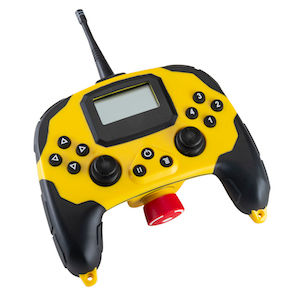
The original FORT Safe Remote Control is a handheld wireless machine controller paired with a Vehicle Safety Controller receiver. It is distinct from Safe Remote Control Pro and the Endpoint Controller; those newer products' certification and multi-machine features should not be transferred to this configuration.
Quick Verdict
Evaluate the original SRC/VSC pairing for a documented point-to-point machine-control task. Confirm current support, receiver compatibility and the complete stop/recovery architecture before use, and assess any Pro-series migration as a separate system change.
FORT Robotics Safe Remote Control with Vehicle Safety Controller at a Glance
Reviewed scope: Original Safe Remote Control / Vehicle Safety Controller pairing
Operator arrangement: Game-style handheld with built-in emergency-stop control
Receiver: FORT Vehicle Safety Controller
Documented features: Dual processors, dual-channel e-stop, drop/idle detection and vibration feedback
Enclosure reference: IP65 under the applicable installation/use conditions
Generation distinction: SRC Pro/EPC certification and 30-machine pairing are separate product claims
Price: Request a quote for the exact ordering configuration.
Technical Specifications
Specification | Documented configuration |
Reviewed scope | Original Safe Remote Control / Vehicle Safety Controller pairing |
Operator arrangement | Game-style handheld with built-in emergency-stop control |
Receiver | FORT Vehicle Safety Controller |
Documented features | Dual processors, dual-channel e-stop, drop/idle detection and vibration feedback |
Enclosure reference | IP65 under the applicable installation/use conditions |
Generation distinction | SRC Pro/EPC certification and 30-machine pairing are separate product claims |
Design and Build
The receiver distinction matters. The original remote is described with the Vehicle Safety Controller, while the Pro range uses the Endpoint Controller. Confirm exact hardware references and regional configuration before treating either system as a replacement. A similar control layout does not establish radio, wiring or configuration compatibility.
Select a protective control system from the required machine function and exact hardware arrangement. Identify every receiver, input and output used in the response chain. Mechanical installation, power and wiring should follow the applicable product instructions. A product photograph or family rating cannot specify the complete protective function of the assembled equipment.
Configuration and Integration
Define each command and the transition between remote and autonomous or local operation. Determine how the machine establishes control authority and reports its state to the operator. Evaluate visibility and the intended operating area using the approved application procedure. A remote handset does not independently validate the autonomous machine or its navigation system.
Prepare a documented cause-and-effect definition for the required stop and restart states. Keep protective signals distinct from ordinary commands and diagnostics. The selected devices must be integrated within the machine's approved architecture and risk assessment. Record configuration, pairing and hardware revisions so maintenance can restore the validated arrangement.
Applications and Use Cases
Consider the original SRC/VSC pairing for an identified supported machine installation with known commands and protective requirements. Confirm current availability and migration options.
Stop, drop/idle response and recovery need a complete machine definition. The original product's designed-to-standard wording should not become an unsupported SIL3 certification claim borrowed from SRC Pro. Obtain the relevant qualification evidence for the selected system and validate its actual output chain. Preserve pairing, configuration and accepted restart behavior for maintenance and replacement.
Evaluate the system through the complete machine response and intended operating conditions. A device classification is one input to the protective design, while the application determines the necessary response, coverage and recovery. Use the applicable instructions and qualification evidence for the supplied hardware.
Alternatives and Selection
Compare complete original and Pro systems using the same machine commands, required protective response and operating area. Include receiver changes, regional radio configuration and full revalidation.
Price and Value
Price: Request a quote. The quotation should identify the exact product configuration, included options, delivery terms and support scope. Accessories and integration work should be listed separately so the hardware price can be compared on a like-for-like basis. A family name or headline specification is not a complete purchasing description.
Assess value against the work the product enables in the machine. Include the engineering needed to configure it, the equipment that must operate alongside it and the effort required to maintain or replace it. A lower component price can be outweighed by extra integration work, while additional features are valuable only when the application can use them. Compare written configurations rather than assumed package contents.
Pros and Cons
Pros
Defined handset/receiver pairing supports an explicit control architecture
Built-in stop and operator feedback address specified interaction needs
Drop/idle functions can be evaluated within the machine response
Cons
Original and Pro generations have different receiver and feature scope
Support and qualification evidence need exact hardware references
Coverage, control authority and recovery require application validation
Who Should Consider FORT Robotics Safe Remote Control with Vehicle Safety Controller?
Evaluate the original SRC/VSC pairing for a documented point-to-point machine-control task. Confirm current support, receiver compatibility and the complete stop/recovery architecture before use, and assess any Pro-series migration as a separate system change.
The strongest purchasing case is a clearly defined requirement that matches the documented configuration. If the project depends on a particular option, interface or mechanical arrangement, include it explicitly in the order. Keep the accepted configuration with the equipment documentation so a later replacement preserves the intended application.
Commissioning and Acceptance
Validation should follow the approved machine procedure and use the exact installed configuration. Check each required stop source, receiver response, diagnostic indication and permitted recovery sequence. Include power interruption and loss of communication within that procedure. Preserve the accepted wiring, radio configuration and test evidence, and reassess affected behavior when the layout or equipment changes.
FORT Robotics Safe Remote Control with Vehicle Safety Controller FAQ
What is FORT Robotics Safe Remote Control with Vehicle Safety Controller?
The original FORT Safe Remote Control is a handheld wireless machine controller paired with a Vehicle Safety Controller receiver. It is distinct from Safe Remote Control Pro and the Endpoint Controller; those newer products' certification and multi-machine features should not be transferred to this configuration.
Which configuration is reviewed?
Reviewed scope: Original Safe Remote Control / Vehicle Safety Controller pairing. Operator arrangement: Game-style handheld with built-in emergency-stop control.
What is the main selection consideration?
Evaluate the original SRC/VSC pairing for a documented point-to-point machine-control task. Confirm current support, receiver compatibility and the complete stop/recovery architecture before use, and assess any Pro-series migration as a separate system change.
What applications should it be considered for?
Consider the original SRC/VSC pairing for an identified supported machine installation with known commands and protective requirements. Confirm current availability and migration options.
What is a documented advantage?
Defined handset/receiver pairing supports an explicit control architecture. Built-in stop and operator feedback address specified interaction needs.
What limitation matters during integration?
Original and Pro generations have different receiver and feature scope. Support and qualification evidence need exact hardware references.
What is the price?
Price: Request a quote. Specify the exact ordering configuration, required options, accessories and delivery terms.
How should an alternative be compared?
Compare complete original and Pro systems using the same machine commands, required protective response and operating area. Include receiver changes, regional radio configuration and full revalidation.
Product information: FORT Robotics original Safe Remote Control manufacturer information, SRC documentation references and its supplied listing.
Pricing is quotation-based and may change. Options, availability, delivery and application requirements depend on the selected ordering configuration.


