
Datalogic A30 and T4x Smart Cameras Review

Updated: 7 days ago
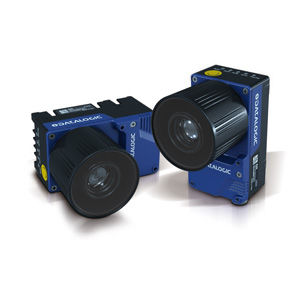
Datalogic’s A30 and T4x families combine CCD imaging, onboard processing and IMPACT inspection programs. Image format and capture rate depend on the selected model. Price: Request a quote for a current supported configuration.
The camera should be selected as part of an imaging system rather than evaluated from one headline specification. The useful result is an image that reveals the required feature at the right time, followed by a reliable inspection or measurement decision. This review considers the documented acquisition package, optical implications and practical purchasing scope for A30 and T4x Smart Cameras.
Quick Verdict
A30 and T4x are fully embedded smart-camera families rather than simple image sources for a host computer. Their useful distinction is combining CCD acquisition with on-camera inspection programs developed in IMPACT. They are particularly relevant as references for an established installation; current hardware and software support should be established before a new design.
A30 and T4x Smart Cameras at a Glance
Product: Datalogic A30 and T4x Smart Cameras
Image format: A30: 640 × 480; T4x: selected VGA, 2MP or 5MP-class imager
Acquisition: Ccd Acquisition With Onboard Inspection Processing
Interface: Gigabit Ethernet, RS-232 and discrete I/O
Capture rate: A30: listed 60 fps acquisition; T4x rate depends on selected imager
A30 imager: 640 × 480 CCD
T4x image choices: VGA, two-megapixel and five-megapixel-class CCD options
Processor: A30 800 MHz; T4x 1.1 GHz in archived guide
Lens mount: C-mount
Protection: IP67 configurations in archived guide
Software: IMPACT inspection-programming suite
Price: Request a quote
A30 and T4x Smart Cameras Technical Specifications
Specification | Value or configuration |
Product | Datalogic A30 and T4x Smart Cameras |
Image format | A30: 640 × 480; T4x: selected VGA, 2MP or 5MP-class imager |
Acquisition | Ccd Acquisition With Onboard Inspection Processing |
Interface | Gigabit Ethernet, RS-232 and discrete I/O |
Capture rate | A30: listed 60 fps acquisition; T4x rate depends on selected imager |
A30 imager | 640 × 480 CCD |
T4x image choices | VGA, two-megapixel and five-megapixel-class CCD options |
Processor | A30 800 MHz; T4x 1.1 GHz in archived guide |
Lens mount | C-mount |
Protection | IP67 configurations in archived guide |
Software | IMPACT inspection-programming suite |
Price | Request a quote |
Design and Optical Requirements
The selected imager determines field coverage and spatial sampling. A30 is a VGA configuration, while T4x includes larger grids with different formats and rates. Select the C-mount lens and illumination from the actual feature and working distance. An IP67 camera body still needs the specified complete connector and optical assembly for the installation.
Acquisition Speed and Integration
Image capture, onboard inspection execution and result communication form the complete cycle. The archived guide’s acquisition rates should not be presented as inspected-parts-per-second. Measure the actual IMPACT program with representative samples and controller communication active. The A30 guide describes trigger and strobe wiring through supported cable or connection-box arrangements.
Programming and Image Processing
IMPACT is the documented inspection-programming environment for these cameras. Build the image acquisition, tool sequence, decision logic and result communication as one controlled recipe. The supplier describes a broad tool and operator-control library, but tool availability should be checked against the supported software and camera firmware. Validate changes with good parts, realistic faults and normal variation before replacing the commissioned production program.
Image Data and Host Capacity
An embedded inspection system should be sized around the complete onboard program and the data that must leave the camera. Result messages, diagnostic images and archived captures impose different network and storage loads. A simple pass/fail message can be much smaller than continuously exporting images, but the actual program and monitoring requirements govern the cycle. Test the full inspection, operator interface and controller communication together.
A30 and T4x Smart Cameras Applications and Use Cases
Presence checks, connector inspection and dimensional feature verification can merit a program trial. Use good parts, realistic faults and normal presentation variation to validate each tool and the final pass/fail logic. Operator controls should preserve the commissioned recipe and make an unusable-image condition visible to the machine.
Building a Useful Acceptance Trial
Prepare representative parts or scenes that include the smallest required feature, normal production variation and realistic faults. Confirm the field of view and exposure before tuning the inspection. Record wrong accepts, wrong rejects, missing frames and the complete trigger-to-decision timing. A trial should also show what happens when the expected image is absent or unusable. This connects camera selection to the station's actual acceptance requirement rather than relying on a sharp reference picture.
A30 and T4x Smart Cameras Price and Value
Price: Request a quote. Ask for the complete A30 and T4x Smart Cameras ordering code and an itemized scope covering the camera, suitable optics, receiving hardware, cables, power and commissioning. Compare quotations for the same image format, acquisition mode and integration scope. The cost of a camera component is different from the cost of a working inspection station. Evaluate any financial return with the plant's actual labor, defect, rework and maintenance data; no universal payback period follows from these specifications.
Comparison and Selection
A host-based camera leaves most analysis in the computer, while these smart cameras execute an inspection program onboard. A30 and the selected T4x model also differ in imager and processor scope. A modern smart-camera replacement should be compared on supported tools, result interfaces, optical scale and migration of the existing inspection logic.
Ordering, Environment and Lifecycle
The available manufacturer guides describe an older product generation, introduced in 2013. Obtain a current lifecycle, repair and IMPACT compatibility statement. Preserve the installed program, calibration, firmware and configuration before migration. Do not assume that a newer software release supports every older camera or imports its recipe without changes.
Pros and Cons
Pros
Onboard programmable inspection architecture.
Documented I/O and network/serial integration.
Several imager choices within the reviewed families.
Cons
Archived-generation support and availability need confirmation.
Acquisition rate does not establish inspection throughput.
Software and recipe migration are part of replacement scope.
Who Should Buy A30 and T4x Smart Cameras?
Shortlist the reviewed A30/T4x generation when its installed inspection program, imager and result interfaces can be supported. For a new machine, request the current recommended smart-camera configuration and test the actual onboard program before fixing the station cycle. The proposal should include optical setup, software support, controller communication, service and migration scope.
A30 and T4x Smart Cameras FAQ
Are these host-only cameras?
No. The reviewed architecture combines CCD capture with onboard inspection processing.
What software is described?
The IMPACT suite is named for inspection programming and operator controls.
What imager does A30 use?
The supplied model description specifies a 640 by 480 CCD.
Does every T4x have the same sensor?
No. VGA, two-megapixel and five-megapixel-class options are described.
Does acquisition rate equal inspection rate?
No. Onboard tools, exposure and result communication determine the complete cycle.
Which communication paths are described?
Ethernet, serial and discrete I/O are documented; confirm the exact supported protocol and wiring.
What is the price?
Price: Request a quote for a current supported camera, optics, software and integration.
What should replacement planning include?
Include the existing program, firmware, optical calibration, controller interfaces and a representative acceptance trial.
Price: Request a quote. Final configuration, pricing, availability and support terms depend on the supplier's current quotation.


