
Comau Agile1500 AGV Review: Specs, Uses, Pros & Cons

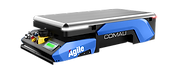
Comau Agile1500 AGV review: Documented variant — Agile1500 rel.1. Payload — Up to 1,500 kg. This guide examines the documented configuration, practical engineering tradeoffs and the buying questions that matter for a successful installation.
Quick Verdict
A credible heavy-load transport platform for factories that need configurable upper equipment. Evaluate the exact Agile1500 release and its support package, because the catalog describes a specific earlier configuration rather than every current Comau mobile robot.
Technical Specifications
Technical field | Documented configuration / buying implication |
|---|---|
Documented variant | Agile1500 rel.1 |
Payload | Up to 1,500 kg |
Battery | Lithium; opportunity charging described |
Sensing | Front and rear laser scanners |
Architecture | Modular load equipment |
Ecosystem | Kollmorgen-based AGV compatibility described |
Price | Request a configuration-specific quotation |
Design and Engineering Assessment
A 1.5-ton transport rating is useful only when the load remains inside the permitted center-of-gravity and floor-loading envelope. Upper equipment adds mass and can move the load higher, changing braking, cornering and clearance requirements. Opportunity charging is operationally valuable when it is designed around real dwell times; it is not a promise that the vehicle never needs charging. The stated Kollmorgen compatibility should be checked at fleet-controller, map and safety-interface level rather than treated as automatic plug-and-play interoperability.
Applications and Best-Fit Projects
Consider repetitive material delivery between manufacturing cells and logistics stations. Compare a tugger when several destinations can share one milk run.
Mission design and fleet integration
Start with the movement that must be completed: what is collected, where it is released, how the load is identified and who confirms the handoff. An AMR can travel successfully while the material workflow still fails because the receiving station is occupied or a pallet has the wrong identifier. Define accepted, rejected and timed-out mission states. For warehouse integration, preserve a clear owner for inventory changes so a robot retry cannot duplicate a transfer in the business system.
Throughput, charging and practical performance
Fleet sizing should use full mission time, including pickup, docking, unloading, congestion and charging. Maximum travel speed is a poor proxy for delivered loads per hour. Evaluate the busiest shared aisle and the station with the longest queue before adding vehicles. An additional robot can increase contention if the transfer point remains the bottleneck. Keep enough battery and charger margin for peak shifts and predictable recovery, rather than assuming average utilization will describe the worst day.
Facility readiness and recovery
Survey floor joints, ramps, low obstacles, overhead load projections and pedestrian crossing points. Assess the complete moving load envelope, not only the base footprint. The operator needs a clear procedure for blocked paths, localization faults, damaged carriers and manual removal of goods. Recovery should leave the mission and inventory state consistent. A supervised pilot is most useful when it includes normal exceptions and shift changes, rather than a single clear-aisle demonstration.
Price, Value and What the Quote Should Include
Request a quotation for the exact configuration described in the technical table. Separate the base equipment from tooling, software options, installation, commissioning, training and ongoing service. Ask the supplier to identify the delivered revision and acceptance obligations in writing. A low hardware price is not a saving if the project requires unbudgeted integration or unsupported accessories.
For the value assessment, compare the present workflow with a realistic proposed cycle. Include the time people still spend loading, replenishing, checking quality and recovering faults. Estimate savings only from changes the proposed system can actually deliver. Keep maintenance, changeover and support availability in the calculation, and use a representative pilot to replace optimistic assumptions with measured results.
Pros and Cons
Strengths
• 1,500 kg documented payload
• Modular upper equipment
• Opportunity charging architecture
Limits to Account For
• Release-specific lifecycle diligence
• Loaded vehicle geometry governs route design
Commissioning and Acceptance Checklist
Confirm release-specific software support, load-module drawings, turning clearances, floor tolerances and the full loaded duty cycle.
Write the required result, test conditions and pass/fail threshold before running acceptance. Include the least favorable normal load or part, a representative shift or operating sequence and the recovery cases that occur in the real workflow. Keep a record of the supplied hardware, software and settings so future maintenance can restore the same validated behavior.
Who Should Consider It
Consider repetitive material delivery between manufacturing cells and logistics stations. Compare a tugger when several destinations can share one milk run. A credible heavy-load transport platform for factories that need configurable upper equipment. Evaluate the exact Agile1500 release and its support package, because the catalog describes a specific earlier configuration rather than every current Comau mobile robot.
Frequently Asked Questions
What is Comau Agile1500 AGV best suited to?
Consider repetitive material delivery between manufacturing cells and logistics stations. Compare a tugger when several destinations can share one milk run.
Which technical specifications matter most for Comau Agile1500 AGV?
The documented starting points are Documented variant: Agile1500 rel.1; Payload: Up to 1,500 kg; Battery: Lithium; opportunity charging described. Match those values to one supplied configuration; do not combine family endpoints or assume an optional package is included.
How should Comau Agile1500 AGV be integrated into a real workflow?
Start with the movement that must be completed: what is collected, where it is released, how the load is identified and who confirms the handoff. Define the task boundaries, handoff signals and exception states before commissioning. Verify them with the actual tooling, carriers, fixtures or site data rather than a simplified demonstration.
What are the main limitations of Comau Agile1500 AGV?
The main constraints are release-specific lifecycle diligence; loaded vehicle geometry governs route design. A 1.5-ton transport rating is useful only when the load remains inside the permitted center-of-gravity and floor-loading envelope. Compare the complete installed solution against the process requirement rather than relying on a single headline figure.
What does Comau Agile1500 AGV cost?
Request a configuration-specific quotation. A verified fixed public price for the complete package is not established here. The proposal should identify included hardware, required software, integration, training, service and any recurring charges so competing quotations cover the same scope.
Can Comau Agile1500 AGV operate without human involvement?
Do not infer unattended reliability from a successful demonstration. Define which task steps are automated, which still require operators and how the system reacts to missing inputs, obstruction or process faults. Release only the validated operating envelope.
What should be tested before accepting Comau Agile1500 AGV?
Confirm release-specific software support, load-module drawings, turning clearances, floor tolerances and the full loaded duty cycle. Record measurable acceptance criteria and retain the results for the delivered configuration.
How should buyers compare Comau Agile1500 AGV with alternatives?
Use the same task, quality target, operating conditions and support horizon for each proposal. Evaluate the exact Agile1500 release and its support package, because the catalog describes a specific earlier configuration rather than every current Comau mobile robot. Compare total installed and operating cost, including recovery effort and changeover, rather than robot-only price.
Specifications and included options depend on the ordered model and revision. Confirm the final configuration, commercial terms and local support with the supplier.


