
ASI Drives Gemini 500 Dual Wheel Drives Review: Specs, Price and Applications

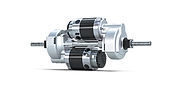
ASI Drives Gemini 500 is a dual-wheel-drive system intended as an alternative to a single-motor transaxle. One motor drives each wheel independently, enabling differential control in a mobile platform. The supplier lists choices for motors, encoders, brakes and ratios rather than one fixed set of vehicle performance ratings.
Quick Verdict
A relevant mobility architecture when independent wheel control is required and the mechanical package fits the platform. Define vehicle mass, wheel geometry, traction and braking before selecting the drive configuration.
ASI Drives Gemini 500 Dual Wheel Drives at a Glance
Specification | Details |
Family | Gemini 500 |
Architecture | Independent motor drive for each wheel |
Intended alternative | Single-motor transaxle |
Control use | Differential wheel control |
Configurable components | Motors, encoders, brakes and ratios |
Vehicle rating | Must be established from the selected configuration |
Design and Engineering Assessment
Differential steering derives turning behavior from the two wheel speeds and their spacing. The actual path also depends on wheel radius, traction and slip, so adding a second motor does not establish a navigation accuracy specification.
Independent drive permits separate wheel commands, but braking and fault handling must remain coordinated. Establish how the platform responds to a failed motor, encoder, communication link or supply under its expected load.
Output Torque and Speed
A gearmotor combines motor behavior with a reduction stage. The ratio trades speed for output torque, while efficiency and mechanical ratings constrain what the final shaft can deliver. Use the rated output operating point for continuous-duty sizing and keep intermittent limits separate. A maximum torque figure does not establish that the gearbox can repeat that load indefinitely.
For a mobile mechanism, start with the wheel radius, required tractive force, gradient and acceleration. Those requirements translate into output torque and speed, which can then be compared with the gearmotor. Changes in wheel diameter affect both force and vehicle speed, so they should be included in the sizing calculation rather than treated as a cosmetic mechanical change.
Electrical and Mechanical Integration
A brushless gearmotor requires a compatible drive and a suitable low-voltage supply. Confirm how the drive uses Hall or other feedback signals and how current limits relate to the motor and gearbox duty. Battery voltage variation, wiring loss and simultaneous system loads can affect the operating point available at the motor terminals.
The output shaft and bearing arrangement must support the intended mechanical loads. Overhung wheels, belt tension and external impact can impose radial or axial forces beyond the torque requirement. The mounting and driven mechanism should be checked together; sufficient output torque cannot compensate for an unsupported shaft load or poor alignment.
Control and Service Requirements
If the mechanism needs accurate travel or stopping, define the required feedback resolution and where position is measured. Gear backlash and compliance influence load-side positioning, while a motor-side signal may not measure every source of output error. Commission under representative load and include reversals, stopping and warm operation.
Keep the approved drive current, feedback wiring, reduction ratio and mechanical configuration in the service record. A replacement with a similar body size may have a different speed winding, ratio or sensor arrangement. Restoring the complete operating point is more important than matching a superficial appearance.
Applications and Selection
Mobile robotic platforms and powered equipment requiring differential control of two driven wheels.
For ASI Drives Gemini 500 Dual Wheel Drives, define the actual machine duty before selecting an ordering configuration. Include the required operating point, available installation space, environment and control interfaces. The specification table describes the product or family; the surrounding machine determines which of those features matters for the intended job.
Price and Value
Price: Request a quote for the exact configuration. Compare the product, compatible control equipment, required mechanical parts, cabling and commissioning as one installed system. A component price alone does not represent the cost of a working automation axis.
Evaluate an alternative against the same duty and acceptance criteria. Match the continuous operating requirement first, then compare transient capability, feedback, mechanical fit and support. This avoids choosing between superficially similar products whose ratings describe different operating conditions.
Pros and Cons
Advantages
Independent wheel actuation for differential control
Motor, brake, feedback and ratio options
Limitations
No single payload, speed or gradeability follows from the family name
Vehicle dynamics and coordinated fault behavior need integration
Who Should Consider ASI Drives Gemini 500 Dual Wheel Drives?
Consider ASI Drives Gemini 500 Dual Wheel Drives for mobile robotic platforms and powered equipment requiring differential control of two driven wheels. Establish the required operating point and installation interfaces before choosing the configuration, and use a representative loaded cycle as the acceptance basis.
ASI Drives Gemini 500 Dual Wheel Drives FAQ
What is ASI Drives Gemini 500 Dual Wheel Drives?
ASI Drives Gemini 500 is a dual-wheel-drive system intended as an alternative to a single-motor transaxle.
Which specifications matter most?
Family: Gemini 500. Architecture: Independent motor drive for each wheel. Interpret the remaining ratings within the selected configuration and operating duty.
What applications should it be considered for?
Mobile robotic platforms and powered equipment requiring differential control of two driven wheels.
What is the main advantage?
Independent wheel actuation for differential control. Motor, brake, feedback and ratio options.
What limitation affects integration?
No single payload, speed or gradeability follows from the family name. Vehicle dynamics and coordinated fault behavior need integration.
What is the price?
Request a quote for the selected model, options and delivery terms. Any stated example price applies only to its identified seller configuration and may change.
How should an alternative be compared?
Use the same operating duty, installation envelope and acceptance requirements. Compare the complete system, including the compatible drive or controller, mechanical interfaces and commissioning effort.
What should be specified when ordering?
State the complete model or configuration, intended operating point, mechanical interfaces and required control equipment. Include the relevant environment, accessories and quantity so that the quotation describes a usable system.
Prices are indicative and may change. Confirm the final configuration, commercial terms and delivery schedule before ordering.


