
Applied Motion HX56-100 Hazardous-Location Stepper Motor Review: Specs, Price and Applications

Updated: 4 days ago
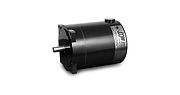
The HX56-100 is a hazardous-location stepper motor intended for a specifically documented motor-and-drive installation. The manufacturer now marks the product obsolete and unavailable for purchase. Its value today is principally in identifying and supporting installed machinery and planning a documented replacement, rather than specifying it as a newly available motor.
Quick Verdict
Retain the exact motor, compatible drive and certification documentation when assessing an installed axis. Neither an ordinary replacement stepper nor a matching flange preserves the original hazardous-location approval. A migration requires confirmation of the actual installation requirements and the replacement assembly scope.
Applied Motion HX56-100 Hazardous-Location Stepper Motor at a Glance
Specification | Details |
Lifecycle | Manufacturer product listing: obsolete; no longer available for purchase |
Motor frame | NEMA 56 |
Documented pairing | STAC6-Q-H / applicable STAC6-Q-HA documentation |
Enclosure | Original manufacturer submission: IP66 / Type 4X |
Original approval claims | ATEX / IECEx Class I Zone 1 and UL Class I Division 1 Groups C/D; exact marking and conditions govern |
Application scope | Historically promoted for oil/gas, printing and paint-finishing machinery |
Commercial basis | Request a support or migration quotation; no current new-product stock claim |
Design and Engineering Assessment
A motor marking is only one part of the installed system. Cable entries, connection details, permitted ambient, mounting and the drive arrangement must agree with the actual documents. IP66 addresses enclosure ingress; it is not a substitute for hazardous-location certification.
The original announcement loosely relates Zone 1 and Division 1. Those classification systems must be assessed under the installation’s actual applicable requirements rather than treated as interchangeable labels. Use the complete approval and installation documentation for the supplied motor.
For motion sizing, microstepping resolution must not be confused with loaded positioning accuracy. Load torque, friction, transmission compliance and the motor operating curve still determine the real axis behavior. A new drive cannot be assumed acceptable merely because it can energize the phases.
Installed-Axis Identification
Record the complete nameplate, serial and part details and the existing drive identity before seeking service. Preserve wiring and configuration records. An archived product name alone is insufficient to establish the approved configuration.
Obsolescence changes the procurement problem: obtain written confirmation of repair, spares or replacement support. A distributor listing or historical launch statement does not establish current production availability.
Replacement Assessment
Compare the complete motion duty, mounting, shaft, feedback and installation environment. Include the motor/drive compatibility and relevant approval scope in the replacement specification.
Commission the replacement as an actual installed axis. Verify commanded direction, current settings, loaded motion and the required documentation before returning the machine to its intended operation.
Applications and Selection
Installed hazardous-location machinery requiring documented service or migration assessment.
For Applied Motion HX56-100 Hazardous-Location Stepper Motor, define the actual machine duty before selecting an ordering configuration. Include the required operating point, available installation space, environment and control interfaces. The specification table describes the product or family; the surrounding machine determines which of those features matters for the intended job.
Price and Value
Price: Request a quote for the exact configuration. Compare the product, compatible control equipment, required mechanical parts, cabling and commissioning as one installed system. A component price alone does not represent the cost of a working automation axis.
Evaluate an alternative against the same duty and acceptance criteria. Match the continuous operating requirement first, then compare transient capability, feedback, mechanical fit and support. This avoids choosing between superficially similar products whose ratings describe different operating conditions.
Pros and Cons
Advantages
Defined historical motor/drive solution for a demanding installation class
Enclosure and original certification scope documented in maker material
Identifiable platform for installed-machine support
Limitations
Obsolete manufacturer status
Replacement equivalence extends beyond electrical torque capability
Original approvals cannot be transferred to an arbitrary new assembly
Who Should Consider Applied Motion HX56-100 Hazardous-Location Stepper Motor?
Consider Applied Motion HX56-100 Hazardous-Location Stepper Motor for installed hazardous-location machinery requiring documented service or migration assessment. Establish the required operating point and installation interfaces before choosing the configuration, and use a representative loaded cycle as the acceptance basis.
Applied Motion HX56-100 Hazardous-Location Stepper Motor FAQ
Is HX56-100 a current new-design product?
The manufacturer listing marks it obsolete and no longer available for purchase. Plan support or migration accordingly.
Can an ordinary NEMA 56 motor replace it?
Frame size alone does not preserve the electrical, mechanical or hazardous-location scope.
Does IP66 prove explosion protection?
No. Ingress protection and hazardous-location approvals address different requirements.
Which drive belongs to the original system?
The documented arrangement uses STAC6-Q-H, with STAC6-Q-HA included in applicable motor-guide documentation. Verify the exact installed combination.
Are Zone 1 and Division 1 interchangeable?
They belong to different classification systems. Apply the actual installation requirements and approval documents.
Does fine microstepping guarantee load accuracy?
No. The mechanism, load and operating conditions still determine actual position performance.
What should a migration quotation include?
The full motor/drive combination, mounting and electrical details, required installation documents and the intended duty.
Can an old stock listing establish availability?
No. Confirm the actual part, condition, provenance and support directly for the proposed supply.
Prices are indicative and may change. Confirm the final configuration, commercial terms and delivery schedule before ordering.


