
ABB GoFa CRB 15000-10 vs Rainbow Robotics RB10-1300: Cobot Comparison

Updated: 10h
IN A NUTSHELL
🔎 THE KEY DIFFERENCE Reach figures need careful reading: ABB GoFa CRB 15000-10 lists 1,520 mm wrist; 1,620 mm flange, while Rainbow Robotics RB10-1300 lists 1,300 mm. Check the same tool position and reference point before deciding which robot reaches your fixture. |
→ CONSIDER ABB GoFa CRB 15000-10 Consider it when the stated load suits your task and its exact reach reference matches your layout. This article compares 10 kg with a published reach of 1,520 mm wrist; 1,620 mm flange; include the gripper and part in the load. |
→ CONSIDER Rainbow Robotics RB10-1300 Consider it when the stated load suits your task and its exact reach reference matches your layout. This article compares 10 kg with a published reach of 1,300 mm; include the gripper and part in the load. |
💡 THE TAKEAWAY Check the real tool, movement path and safety assessment before choosing. A collaborative label does not make every task safe without guarding; compare complete installation quotes. |
ABB GoFa CRB 15000-10 vs Rainbow Robotics RB10-1300 is a buying comparison built around the actual robot configurations, not a collection of family maxima. This is a 10 kg match with a modest price gap, so commissioning effort and geometry can matter more than arm price. The useful result is a cell that meets its load, quality, access and throughput requirements with a maintainable integration plan.
The starting-price figures used here are USD 40,000 for ABB GoFa CRB 15000-10 and USD 38,600 for Rainbow Robotics RB10-1300, taken from the individual ATC reviews. They are indicative review prices rather than binding current quotations. This guide separates rated payload, published workspace, positioning repeatability and complete-system requirements so that a cheaper or larger arm is not mistaken for a valid finished-cell alternative.
Quick verdict

ABB GoFa CRB 15000-10: Distributed machine tending and handling when the 1,520 mm wrist workspace can avoid a slide or moving a fixture. Its longer reach is paired with 10 kg, not the 12 kg load rating of GoFa 12. Both wrist and flange reference positions matter when using a supplier's reach study.
Rainbow Robotics RB10-1300: A 10 kg tending or handling cell within a 1,300 mm envelope using the CB06 controller. Protocol names and collaborative design statements do not establish the exact enabled options or the finished cell's compliance.
ABB GoFa CRB 15000-10 vs Rainbow Robotics RB10-1300: technical specifications
Specification | ABB GoFa CRB 15000-10 | Rainbow Robotics RB10-1300 |
|---|---|---|
Rated payload | 10 kg | 10 kg |
Published reach / geometry | 1,520 mm wrist; 1,620 mm flange | 1,300 mm |
Position repeatability | ±0.02 mm | ±0.05 mm |
Controlled axes | 6 | 6 |
Arm / system mass in review | 51 kg | 36.5 kg |
Controller / HMI | ABB OmniCore C30 | Rainbow Robotics CB06 standard robot control box |
Indicative starting price | USD 40,000 | USD 38,600 |
The figures refer to the variants discussed in the linked reviews. ABB distinguishes wrist and flange reach; those references must be retained in any layout comparison.
Payload: start with the complete attached tool
The two robots share a 10 kg nominal rating. That is a screening boundary for the entire attached load, not a promise that either can carry a 10 kg part plus a gripper. Subtract adapters, valves, cables and the complete end effector before allocating part mass. Then check the actual center of gravity, tool moment and inertia against the manufacturer's load conditions.
For this pair, the reviewed masses are 51 kg for ABB GoFa CRB 15000-10 and 36.5 kg for Rainbow Robotics RB10-1300. Installation mass is separate from tool payload. Include the mounting frame, anchoring, lifting method and service access in the concept. A lighter arm may simplify handling, while a heavier installation may demand a different support structure; neither is a reason to omit dynamic-load and stability checks.
Workspace and posture: check every required pose
ABB GoFa CRB 15000-10 is listed with 1,520 mm wrist; 1,620 mm flange, compared with 1,300 mm for Rainbow Robotics RB10-1300. These figures are useful for an initial layout but do not by themselves describe the usable workspace of the actual tool. An endpoint may be reachable while its required orientation, approach corridor or escape path is not. Include the machine door, fixture, cables and maximum part envelope in the study.
A matched joint count does not make the joint limits, singularity behavior, approach geometry or cable routing identical. Use a representative tool model in simulation or a physical trial. Include the deepest process pose, the farthest pickup, a reject position and a maintenance or recovery pose. If the cheaper concept needs an added slide or relocated fixture, count that work before comparing arm prices.
ABB GoFa CRB 15000-10: engineering assessment
The reviewed ABB GoFa CRB 15000-10 combines 10 kg rated load with 1,520 mm wrist; 1,620 mm flange and ±0.02 mm positioning repeatability. Include the distant pickup and deepest machine approach in the same demonstration. The larger swept volume can simplify process layout while making guarding, cable routing and operator access more demanding.
Its longer reach is paired with 10 kg, not the 12 kg load rating of GoFa 12. Both wrist and flange reference positions matter when using a supplier's reach study. An existing ABB team may gain from using RAPID and RobotStudio, but that benefit should be assessed against the offered controller version, enabled options and the staff who will maintain the application.
Rainbow Robotics RB10-1300: where the alternative adds value
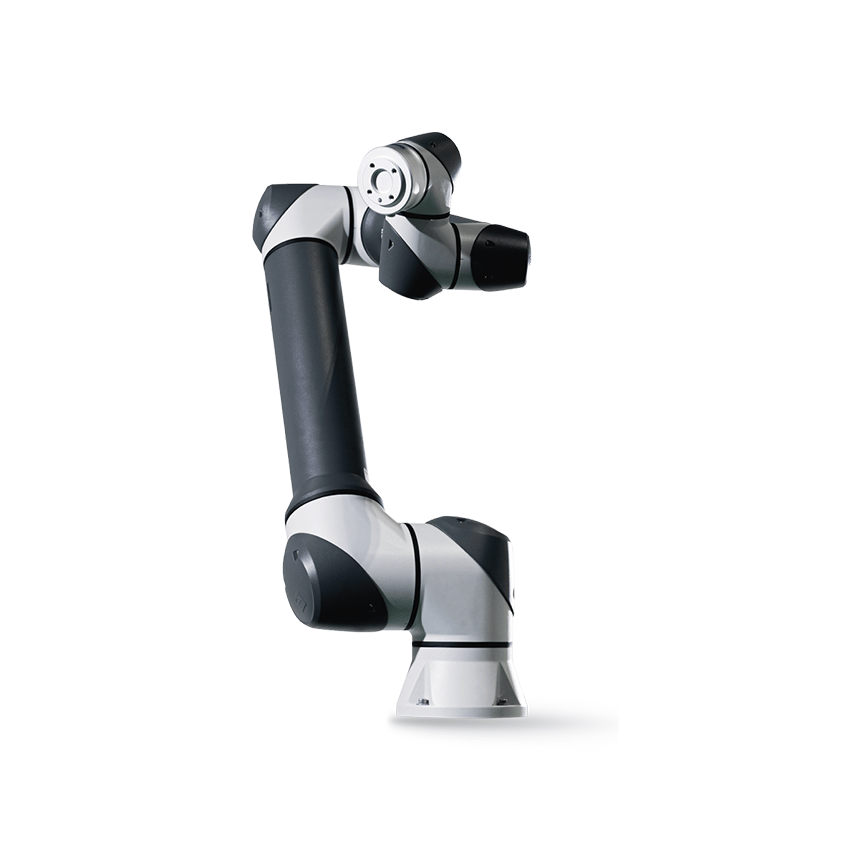
The reviewed Rainbow Robotics RB10-1300 offers 10 kg rated load, 1,300 mm and ±0.05 mm positioning repeatability. Evaluate the offered programming workflow with the operators and maintainers who will actually use it. Request a backed-up production program, fault-diagnosis procedure and configuration-specific support plan alongside the timed application test.
Protocol names and collaborative design statements do not establish the exact enabled options or the finished cell's compliance.
Positioning, force interaction and process quality
The tighter stated position-repeatability value is ±0.02 mm, compared with ±0.05 mm for the other robot. That is a useful shortlist input, not a finished-part tolerance guarantee. Repeatability concerns returning to a pose under specified conditions; absolute accuracy, tool calibration, fixture movement and process variation remain separate engineering concerns.
For assembly, measure seating quality or fastener results; for handling, measure reliable pickup, placement and reject recovery. Use representative production variation rather than one prepared sample. The robot that meets the actual process criterion with the simpler maintained system can be the better choice even when a competing data-sheet figure looks more impressive.
Programming, interfaces and ownership
The ABB source identifies ABB OmniCore C30. RAPID and RobotStudio are part of the ABB workflow described in the reviews. A familiar software environment can reduce maintenance friction, but only if the actual team can back up, diagnose and restore the application. Ask for the exact version and the rights to the finished program.
The alternative's reviewed control or HMI arrangement is Rainbow Robotics CB06 standard robot control box. Verify the programming interface, licenses, communication options and integration responsibilities in the offered package.
Write an I/O and network schedule for the gripper, PLC, machine, inspection device and safety system. Verify voltages, connector pinouts, signal direction and timeout behavior. A protocol listed in a review is not proof that every license or board is supplied. Include a lost communication link, failed acknowledgement and an interrupted production sequence in the acceptance demonstration.
Safety, environment and real cycle time
Collaborative capability is one element of an application risk assessment. The tool, carried object, machine, hot or sharp process and trapping points may need safeguards beyond the arm's own functions. Establish intended operating modes and validate the completed safety concept with representative operator access. A collaborative label is not permission to assume that fencing or sensing is unnecessary.
The ABB review lists IP67 for the arm. Specify the alternative's exact environmental rating and approved operating conditions in the quotation; do not infer them from its appearance or product class. Ingress ratings do not authorize every cleaning chemical, steam treatment or pressure-washing procedure. Check the controller, cable exits, connectors and tool independently, and distinguish standard protection from a paid option.
Compare useful output using the same part, tool, normal safety settings and peripheral delays. Maximum or typical TCP speeds are not a matched cycle-time benchmark. Gripping, machine dwell, process time and operator visits may dominate. Record good parts, rejected parts, changeover and restart time alongside motion time before turning a supplier demonstration into a payback estimate.
Price and total installed cost
The indicative starting prices are USD 40,000 and USD 38,600, a difference of USD 1,400. The lower-priced arm is Rainbow Robotics RB10-1300. Those figures come from the linked ATC reviews and may change. They do not establish equivalent controllers, pendants, safety equipment, software, stock or turnkey scope.
Request comparable bills of materials covering the robot, tool, fixture, machine interface, vision, safety devices, controller options, commissioning and training. Include freight, tax and installation where relevant. Name the supplier responsible for diagnosing faults across component boundaries and obtain configuration-specific warranty and delivery commitments. A cheap arm that needs an unsuitable layout changed is not automatically the cheaper installed system.
How to choose for a representative application
Decision | Start by testing | Why it matters |
|---|---|---|
Load and tooling | 10 kg versus 10 kg | Include all adapters and attached equipment |
Workspace | 1,520 mm wrist; 1,620 mm flange versus 1,300 mm | Match geometric references and tool orientation |
Configuration | 6 versus 6 controlled axes | Do not merge different operating concepts |
Process quality | ±0.02 mm versus ±0.05 mm | Measure the finished result, not only robot position |
Value | USD 40,000 versus USD 38,600 | Align the installed package and maintenance plan |
This is a 10 kg match with a modest price gap, so commissioning effort and geometry can matter more than arm price. For the ABB candidate, the application to demonstrate is: distributed machine tending and handling when the 1,520 mm wrist workspace can avoid a slide or moving a fixture. For the alternative, evaluate: a 10 kg tending or handling cell within a 1,300 mm envelope using the CB06 controller. If a load, pose or safety requirement fails, redesign the concept before judging its apparent purchase-price saving.
Acceptance testing before purchase
Give both suppliers the same workpiece range, complete tool CAD, load data, required poses, target cycle, environmental exposure and intended operator interaction. Agree pass criteria before the trial. Test a missed pickup, a rejected part, a stopped machine and restart after power loss. Ask the intended operator to change a recipe and recover the sequence safely; a supplier-only demonstration is not a maintenance handover.
Retain the program, safety configuration, I/O schedule, tool settings and backup procedure. Establish support escalation, replacement-part responsibilities and the revision of the equipment being supplied. Where contact or dual-arm coordination is involved, keep the demonstrated process settings in the acceptance record so that later changes do not silently invalidate the qualified result.
Complete product reviews
Frequently asked questions
Which should I choose: ABB GoFa CRB 15000-10 or Rainbow Robotics RB10-1300?
This is a 10 kg match with a modest price gap, so commissioning effort and geometry can matter more than arm price. Distributed machine tending and handling when the 1,520 mm wrist workspace can avoid a slide or moving a fixture. A 10 kg tending or handling cell within a 1,300 mm envelope using the CB06 controller. Choose the concept that passes the actual tool-load, workspace, process-quality and safety tests with an acceptable installed quotation and maintenance plan.
What are the indicative starting prices in US dollars?
The ATC reviews list ABB GoFa CRB 15000-10 from USD 40,000 and Rainbow Robotics RB10-1300 from USD 38,600. The difference is USD 1,400. Prices are indicative and may change; confirm the supplied controller, pendant, software, safety equipment, tooling, delivery and integration scope.
Does the payload rating include the gripper?
Yes. Allocate the permitted load to the complete end effector, adapters and carried part, then check moments and inertia. The ratings used here are 10 kg and 10 kg. A part within the headline rating can still become an excessive load when its tooling is added.
Which has the longer usable workspace?
ABB GoFa CRB 15000-10 lists 1,520 mm wrist; 1,620 mm flange, while Rainbow Robotics RB10-1300 lists 1,300 mm. Verify matching geometric references, tool orientations, approach paths and obstacles. A larger nominal number does not guarantee every required pose or a faster completed cycle.
Does repeatability guarantee the finished-part tolerance?
No. The comparison uses ±0.02 mm for ABB GoFa CRB 15000-10 and ±0.05 mm for Rainbow Robotics RB10-1300. These positioning figures do not independently establish absolute accuracy or completed-process tolerance. Fixtures, tooling, calibration, part variation and contact behavior must be included in the acceptance test.
Do collaborative robots always work without guarding?
No. The complete application needs risk assessment and validation. Tools, sharp or hot objects, trapping points, neighboring equipment and access patterns may require guarding, sensing, interlocks or speed limits beyond the arm's own functions.
Are all controller and software options included?
Not automatically. The source identifies Rainbow Robotics CB06 standard robot control box for Rainbow Robotics RB10-1300, but only a current quotation defines what is supplied and enabled. Confirm programming tools, protocol licenses, hardware interfaces, backups and ownership of the final application program.
What should the supplier demonstrate before purchase?
Require the real tool, representative parts and normal operating settings. Include critical poses, process quality, a realistic cycle, lost grip or communication, operator interruption and safe restart. Record acceptance criteria and retain the configuration and program used in the successful trial.
Specifications and indicative review prices describe the exact configurations discussed. Confirm the offered revision, package, safety requirements, warranty and delivery with the supplier. This is an editorial buying comparison and does not claim a hands-on performance benchmark.

